
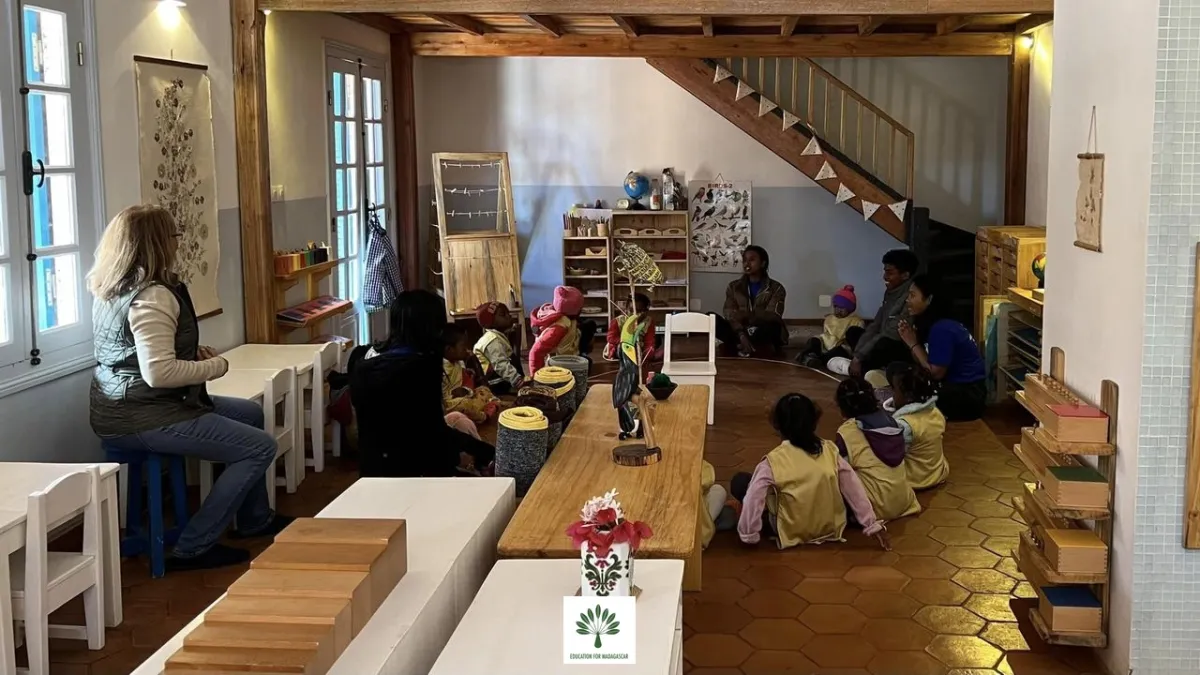
The activity pages described learning support alongside language classes, civic education and workshops about quality, ethics and the environment. They outlined a Montessori-inspired approach: observe, try, create, then share learning with younger children.
Exchanges with French- and English-speaking partner schools gave children opportunities to discover other cultures, in person or remotely. Arts activities included drawing, painting, dance and music; a chess club was also announced.
One account from that period referred to about 80 children taking part; this figure does not describe current enrolment. Digital workshops, tablets and robotics are described in more detail elsewhere in this archive.