
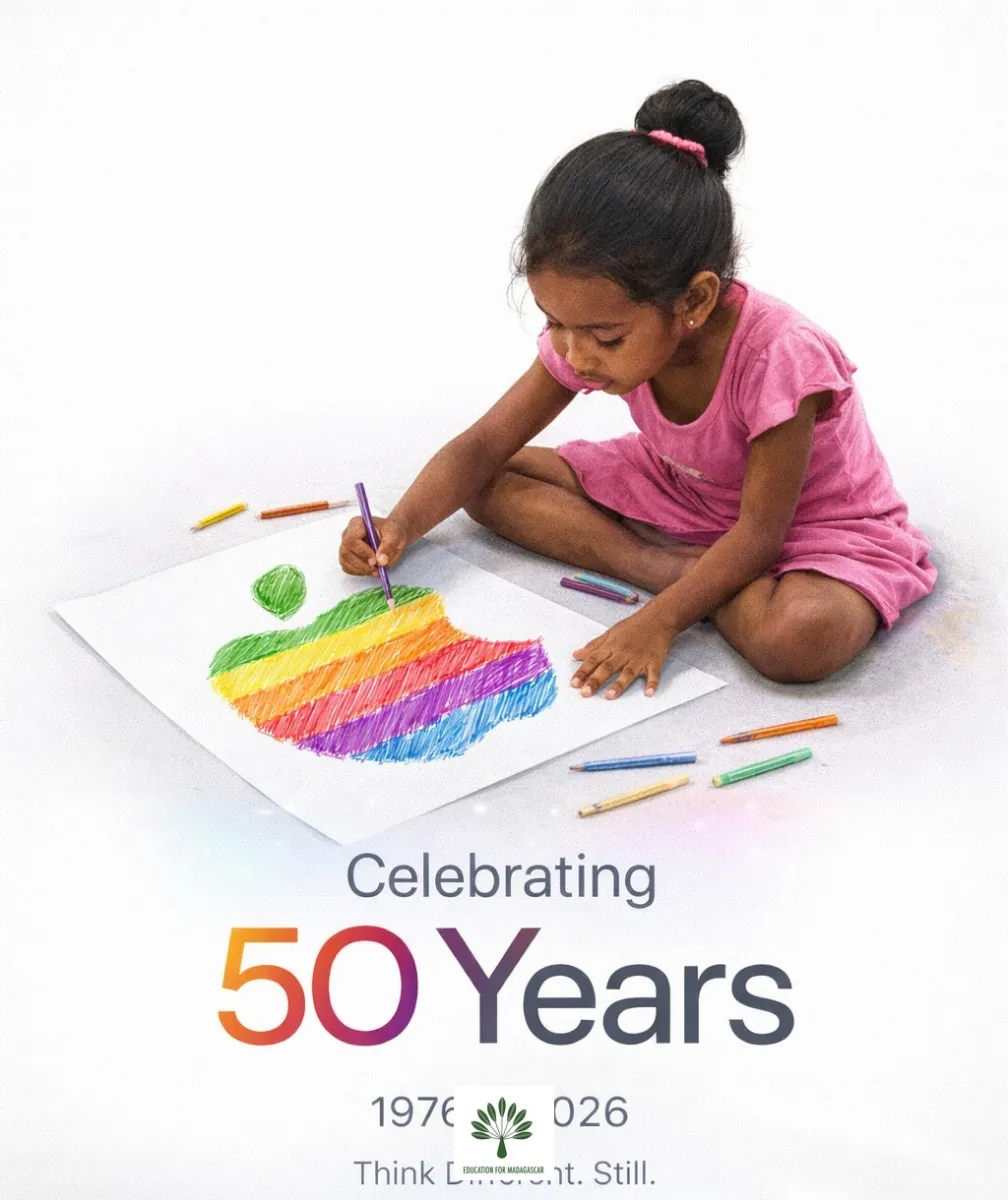
Celebrating Apple’s 50th anniversary! ⬇️⬇️⬇️⬇️⬇️ Apple turns fifty. Fifty years ago, on 1 April, Apple was born: an iconic brand at the heart of the computer revolution. A small disruptor that challenged the status quo, the company distinguished itself over the years through attention to detail and quality, and by constantly making what had been the preserve of specialists simpler and more accessible. Its sometimes bold choices—to build its own ecosystem without worrying about competitors or passing trends, to depend on no one even for the heart of its machines, the processors, and never to sacrifice its users on the altar of advertising or cumbersome regulations—are the foundation of its well-deserved success. Thirty-seven years ago, on 1 April, I walked through Apple’s doors convinced it would be just another employer, where I would stay for two or three years. Then the products won me over, and I stayed for 34 years. Beyond the products, I found an extraordinary community, united by a desire to do better, be more useful and push itself further. When my wife Jackie and I created the NGO Education For Madagascar ten years ago, in April 2016, we chose to use only Apple products to support the education of disadvantaged children in one of the world’s poorest countries. Many people mocked this “rich person’s idea” and predicted it would not last more than a few months. When we opened a free Montessori school for 30 of the most disadvantaged children in 2023, we heard plenty about this “school for the rich” that supposedly “did not understand the harsh reality of the country”. For this symbolic anniversary, I can say that our decision has made a deep impact beyond our own community: - We are a resolutely paper-free organisation that relies exclusively on Apple products for teaching and administration. Our fleet of Macs, iPads and iPhones is of all ages, and is treated with great care by educators and pupils alike. - Madagascar has gradually embraced “Apple mania”. The quality and simplicity are still there, but the brand has become more affordable, and its durability has won over households with modest means who no longer want poor-quality products. - More and more schools across the country—over 15—have chosen Montessori education, which has proved particularly effective in strengthening independence, responsibility, creativity, critical thinking and openness to the world. - The first young people trained by the NGO have now entered the workforce. I am convinced that this experience has had a lasting, positive impact on them, and that the skills and personal qualities they developed have played a large part in their employers’ decisions. Apple and Montessori share a belief in the individual and a commitment to quality, creativity and simplicity. Their mutual success is no accident or surprise. It offers a lesson for the years ahead.