Objective
Why this project?
Support each child’s development across several areas: independence, social and emotional growth, and intellectual development.

Education project
AKKA (Akanin’ny Kilonga) welcomes children aged 3 to 6 in a Montessori environment prepared for their early learning.
Project framework
Why this project?
Support each child’s development across several areas: independence, social and emotional growth, and intellectual development.
Where are we going?
We are building a place of learning—a strong foundation—so every child can enjoy school and keep a desire to learn throughout their education and life.
What approach do we take?
The Montessori approach puts the child first. Learning is shaped around each child’s interests, needs and desire to explore independently, while following a defined curriculum.
The Montessori experience at AKKA
AKKA — Akanin’ny Kilonga Madagascar welcomes children aged 3 to 6. The opening of the school was authorised by the Ministry of National Education (MEN), decision no. 009/2023/CISCO/AVA/DPL of 18 August 2023.
At AKKA, Montessori education takes shape in a prepared environment where each child learns by doing, at their own pace, with attentive guidance from educators.
Montessori education places the learner at the centre of learning and recognises each child’s individual potential. It supports intellectual, physical, psychological, emotional, social and spiritual development.
Dr Maria Montessori, an Italian physician, opened her first school, the Casa dei Bambini (“Children’s House”), on 6 January 1907. There she developed an educational approach for a group of children from disadvantaged backgrounds. This school marked the beginning of Montessori education.
Maria Montessori observed children as they were, rather than as adults wanted them to be. Through observation, she developed teaching methods, prepared learning environments and designed suitable educational materials. She put these principles into practice at the Casa dei Bambini, deepening her understanding of children and continually refining her methods.
For more than a century, Montessori education has spread around the world. It can be used with children from different backgrounds and generations. Learn more about the first Casa dei Bambini →
Learning is organised around each child’s interests, needs and desire to learn independently, while following a defined curriculum. Children can notice their mistakes, examine them and find better ways to complete a task.
In an environment that offers appropriate freedom, children take in information from their surroundings, grow curious and seek new knowledge. They also learn in mixed-age groups: by observing others, sharing what they know and becoming a role model for their peers.
This approach is grounded in observing children’s development, needs and interests:
Montessori education can support children from early childhood through secondary school, whether or not they have identified additional educational needs.
Maria Montessori saw the hand as essential to learning. By touching and handling an object, a child remembers it and gains concrete experience. Learning materials help children build concepts from what they can grasp, touch and feel.
By working with Montessori materials, children gradually build their own understanding and move from concrete experience to abstract ideas at their own pace.
In early childhood, the curriculum brings together complementary areas. Activities and materials help children progress step by step, from concrete experience towards abstract understanding.
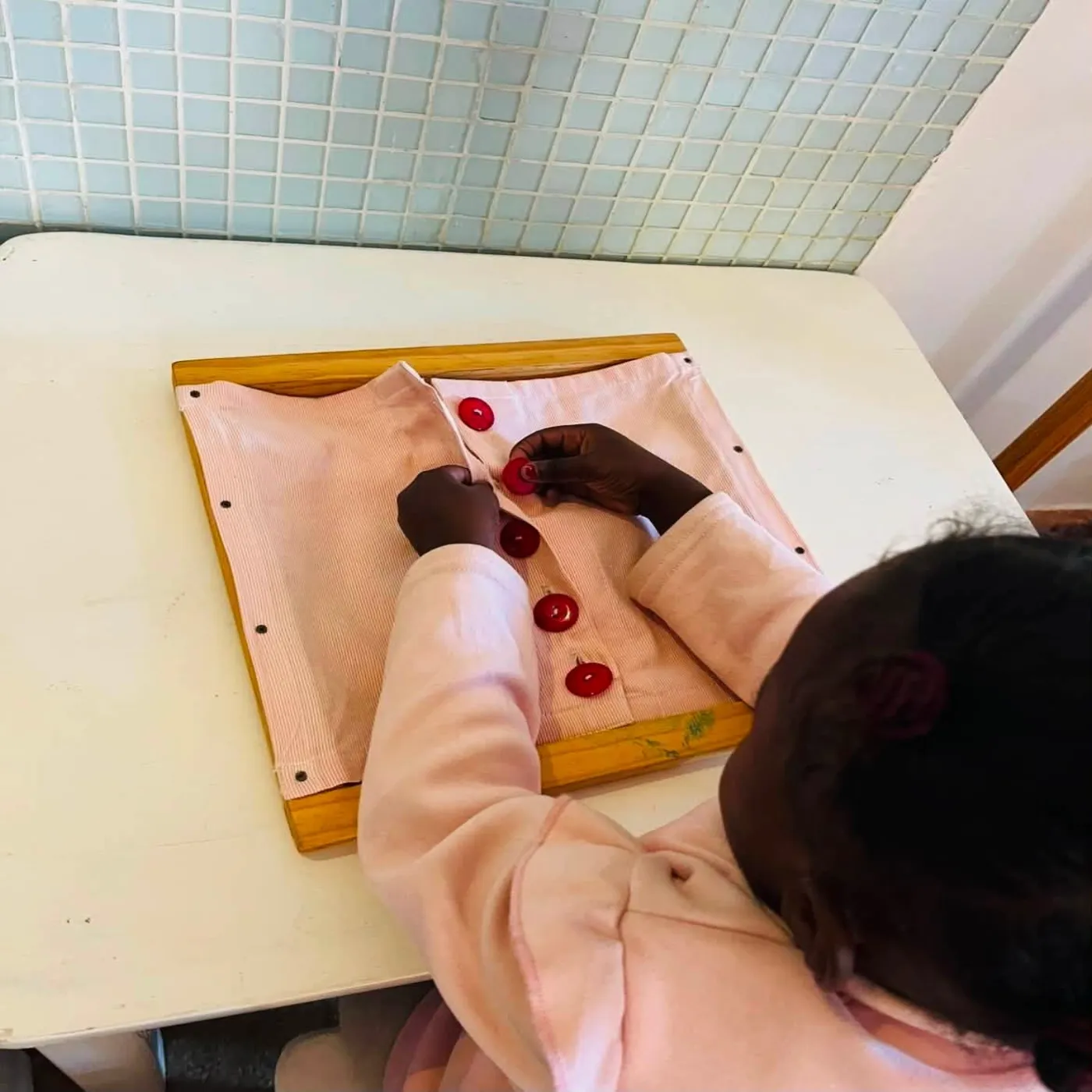
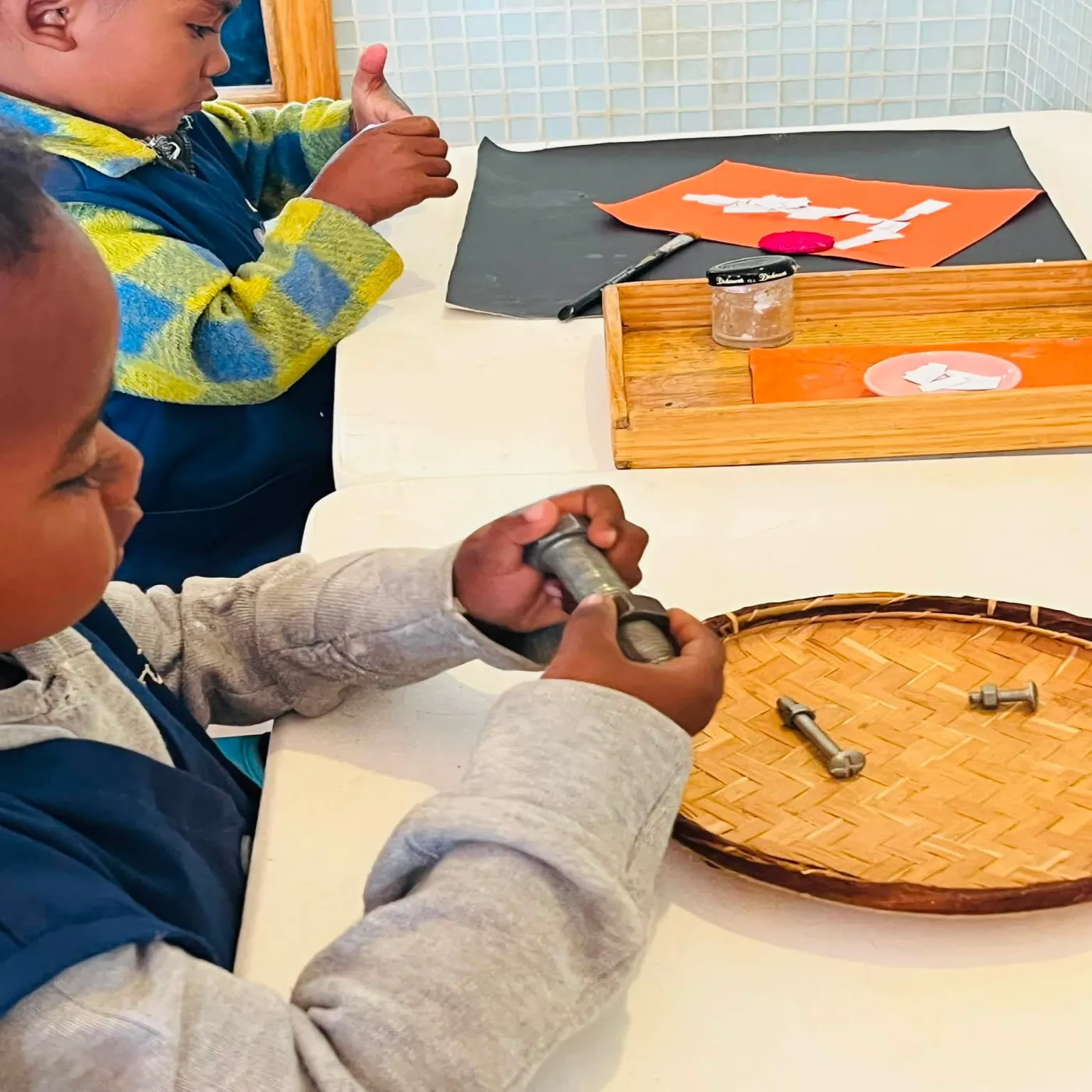
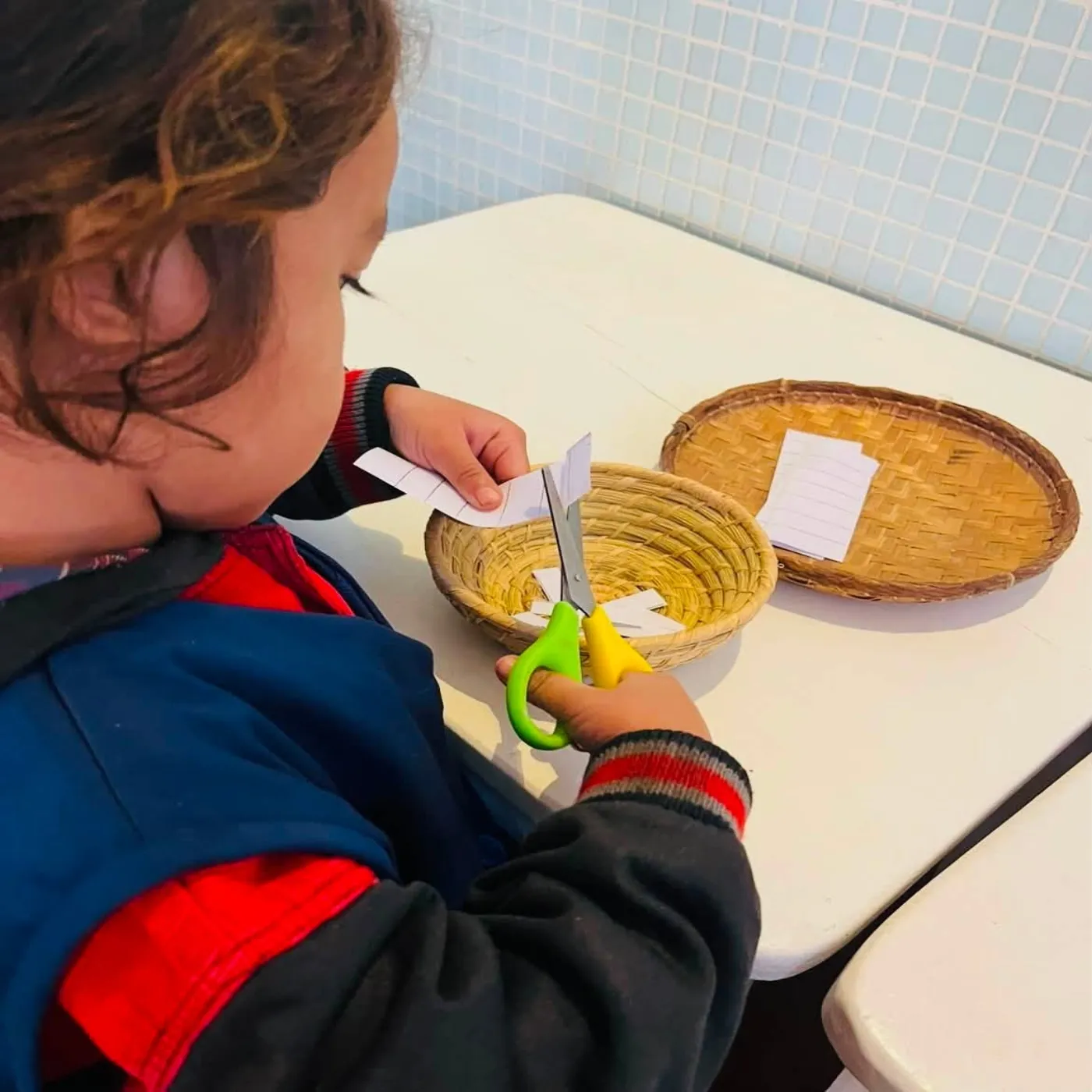
These activities develop fine and gross motor skills, hand-eye coordination, independence in everyday tasks, care for the environment, concentration and perseverance. They include care of self, care of the environment, social skills, and control and coordination of movement.
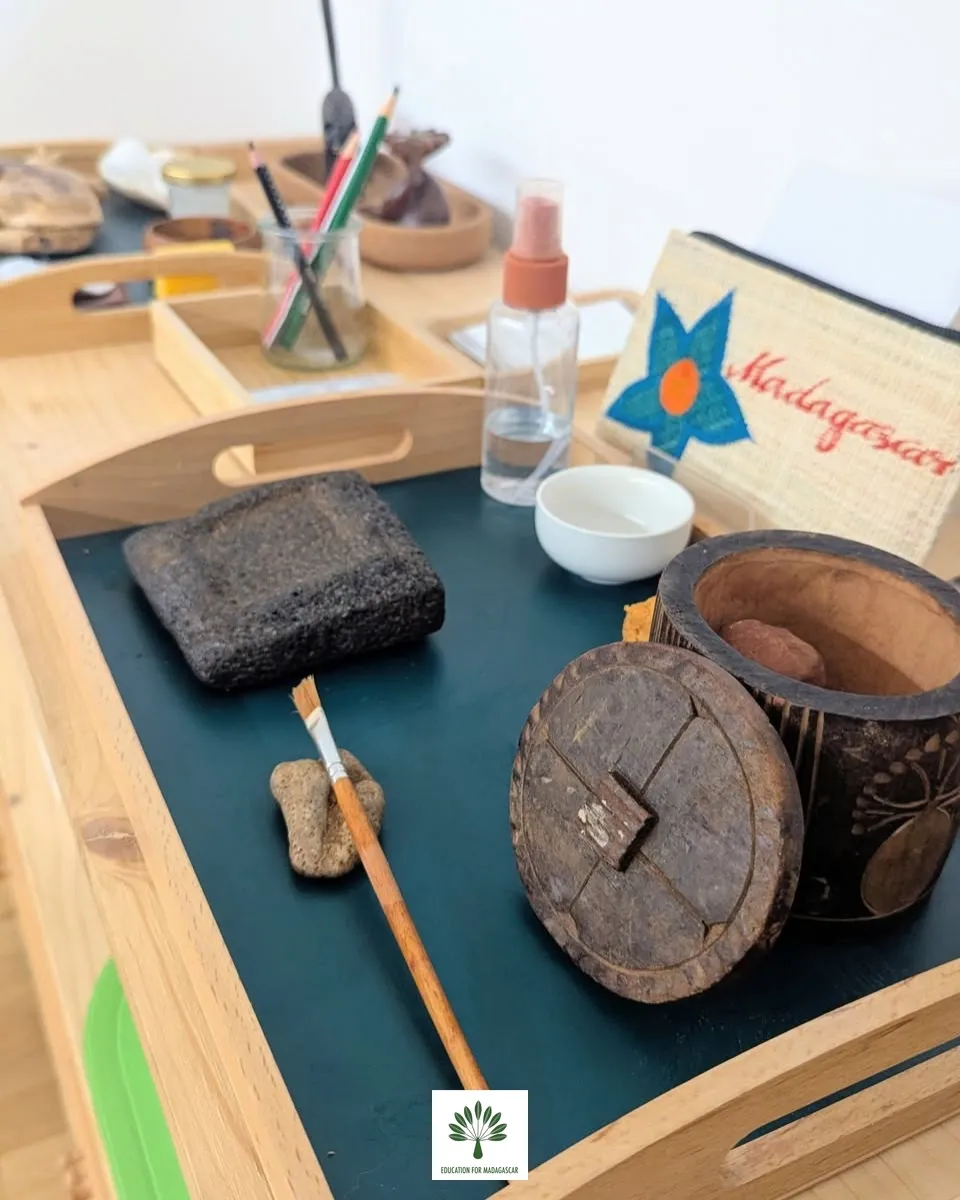
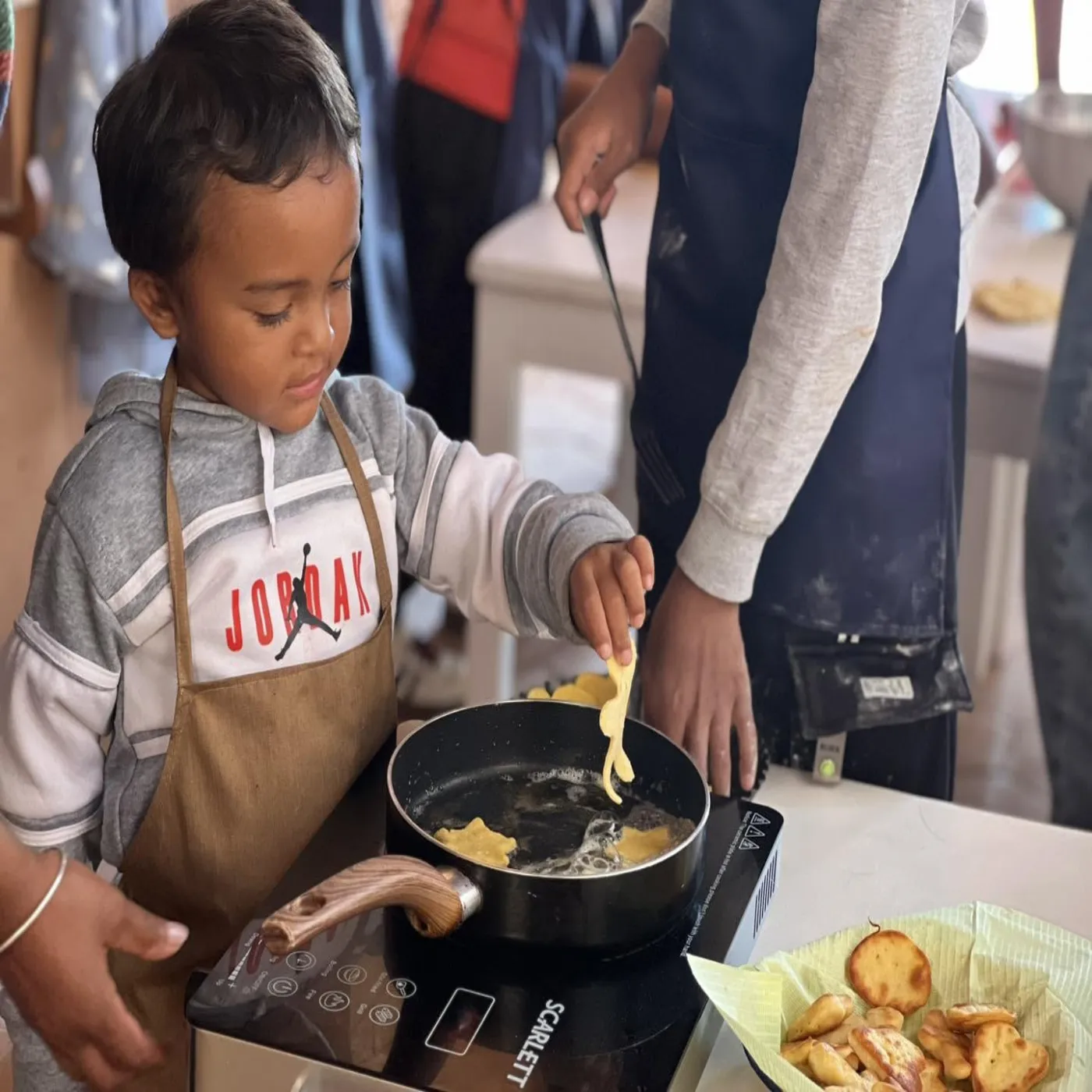
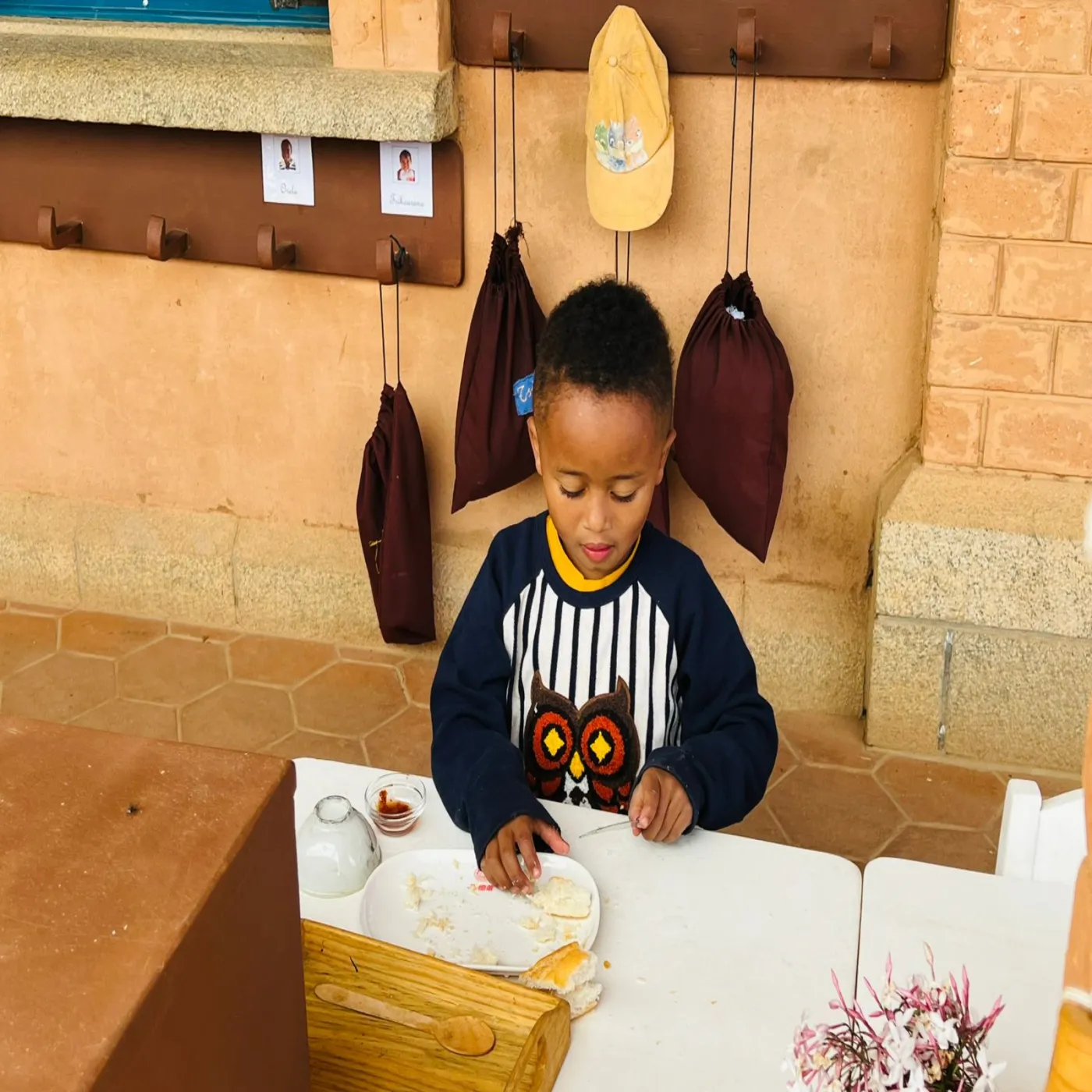
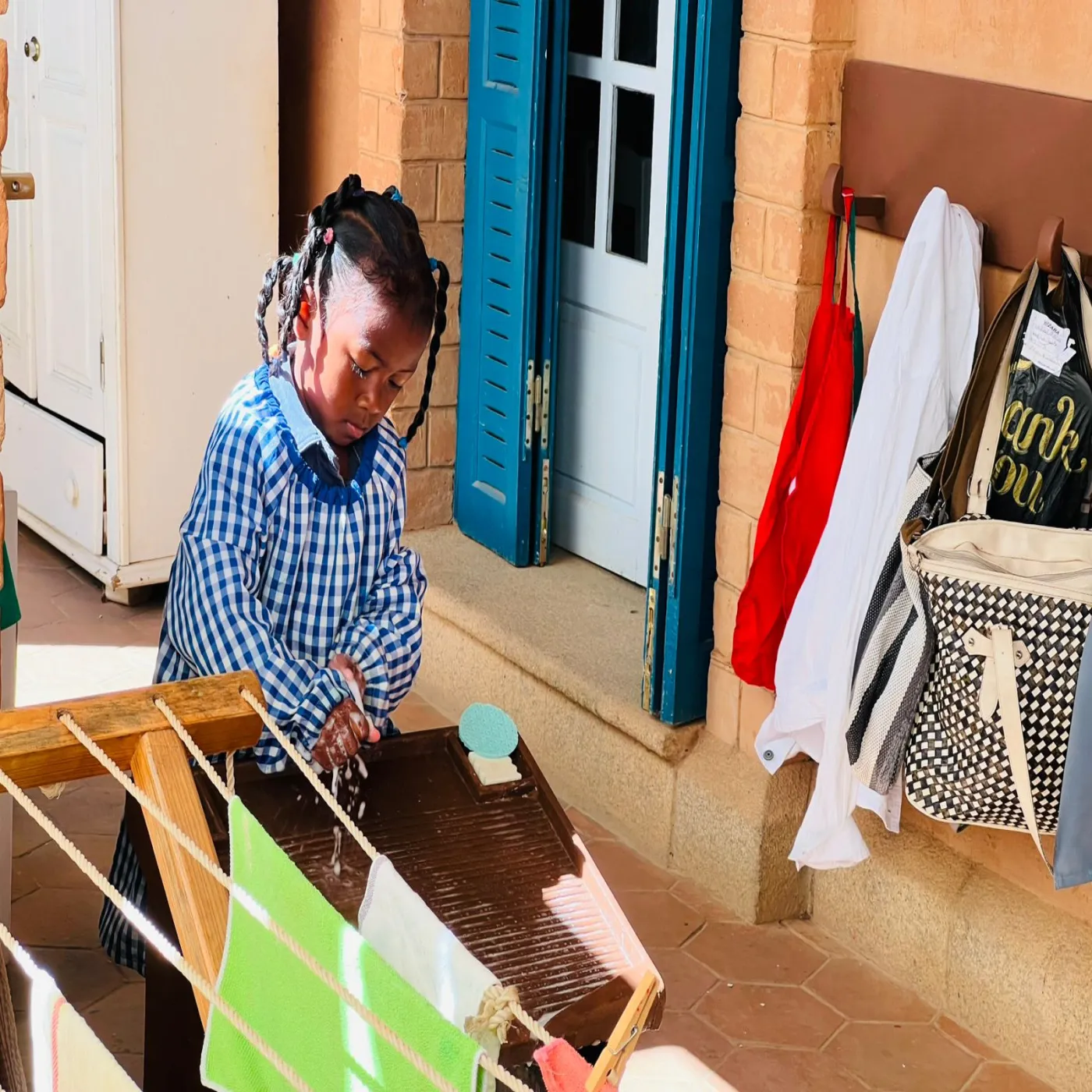
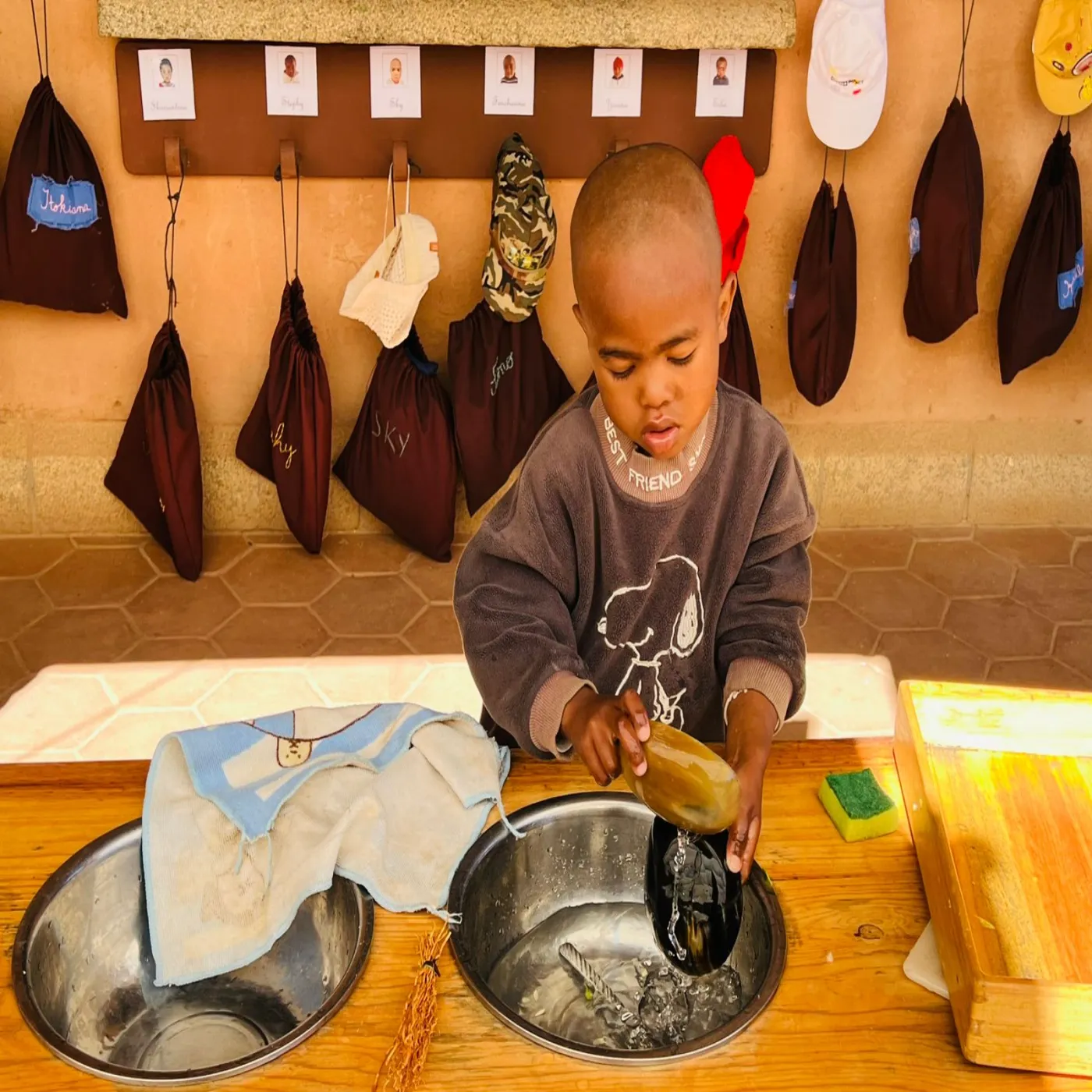
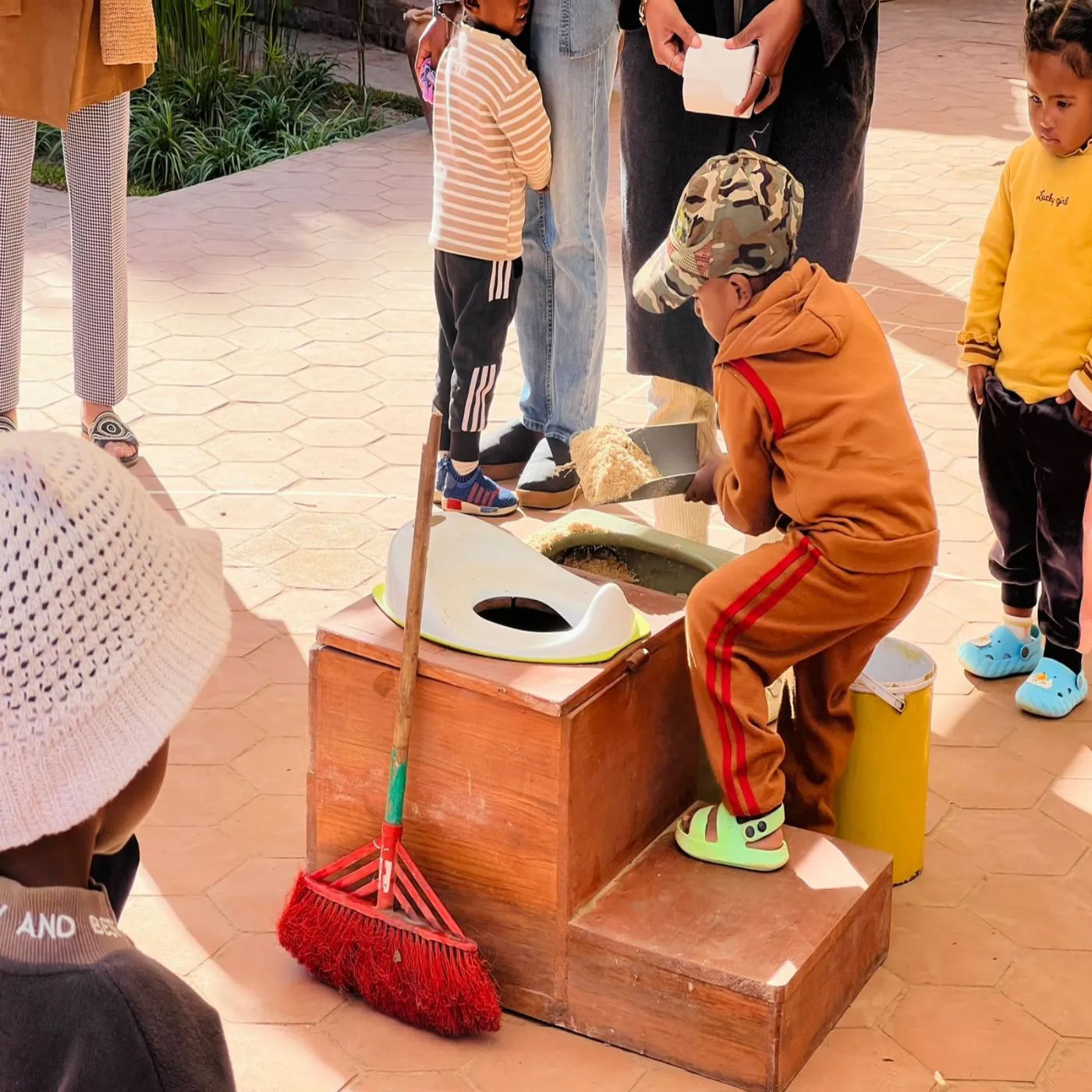
Materials are inspired by familiar everyday objects and adapted to children’s size, creating continuity between home and the classroom. Activities include arranging flowers in a vase, cleaning up spilled water, rolling a mat and putting materials away, using tongs, pouring water, measuring with a spoon, cutting and spreading bread, washing and hanging laundry, cleaning kitchen utensils, adding compost to dry toilets, cutting paper and fastening buttons.
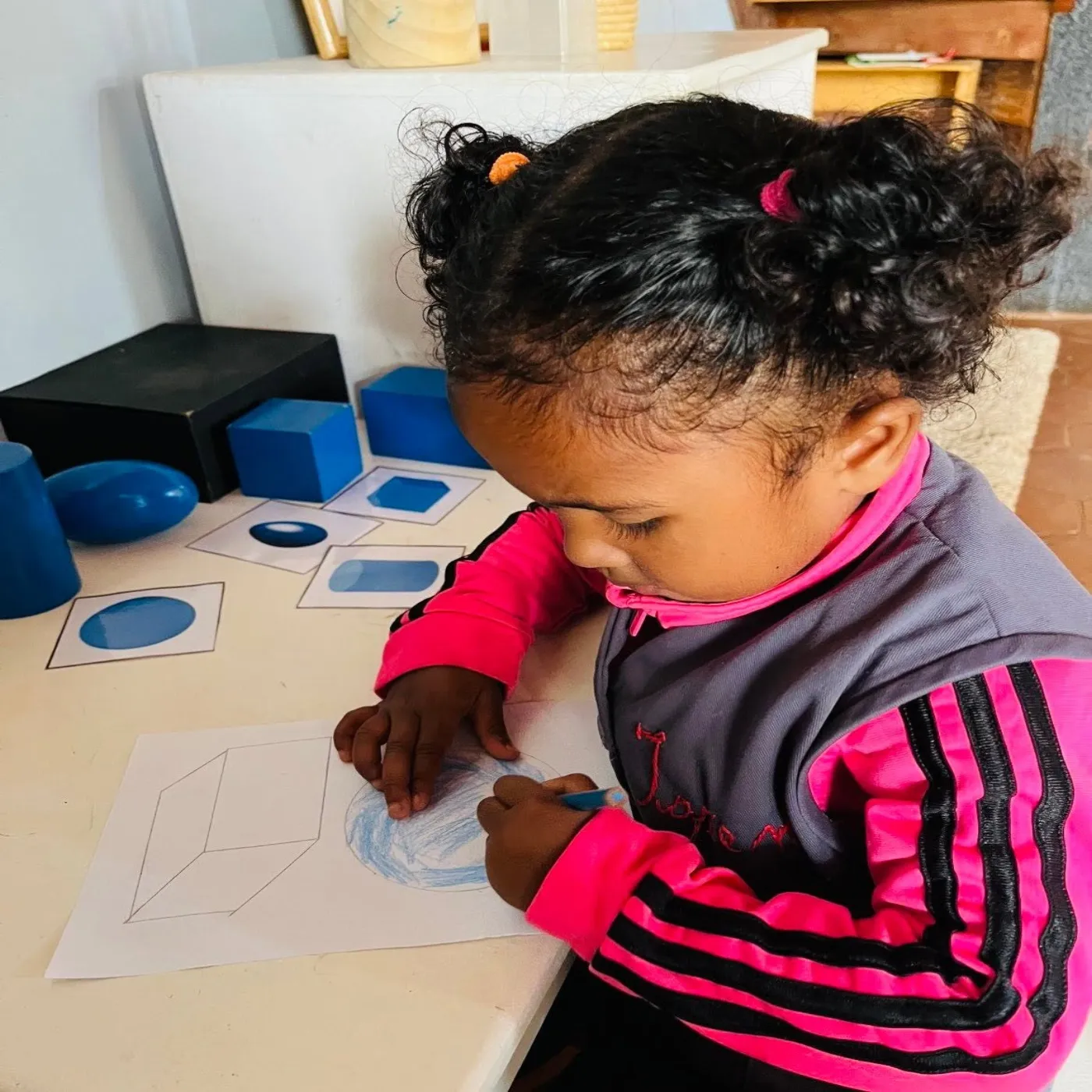
Sensory exploration helps children coordinate their five senses and discover their surroundings. Before reading and writing, they learn to perceive and distinguish what is around them. Sensory materials also prepare them for classification, organisation, sequencing and mathematics.
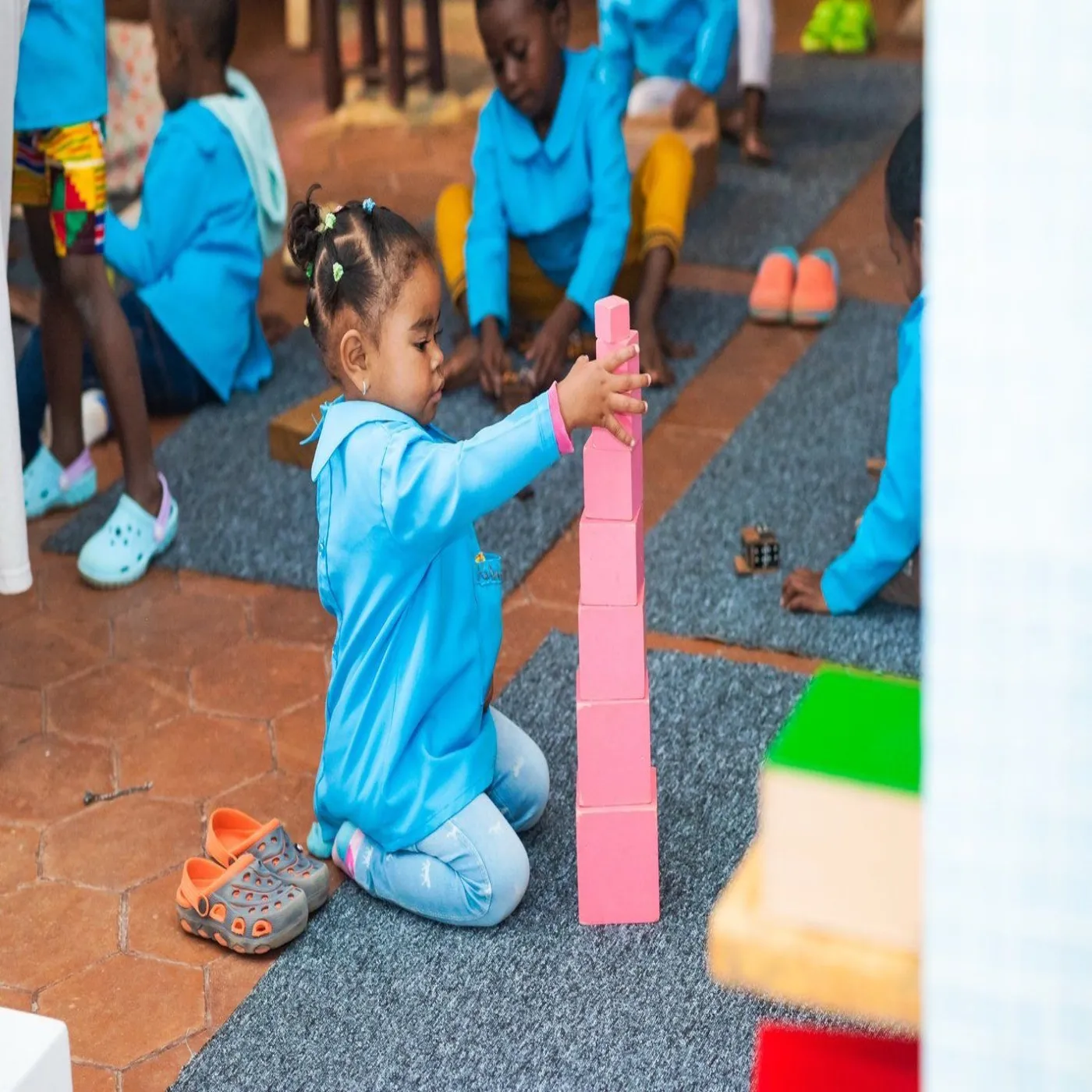
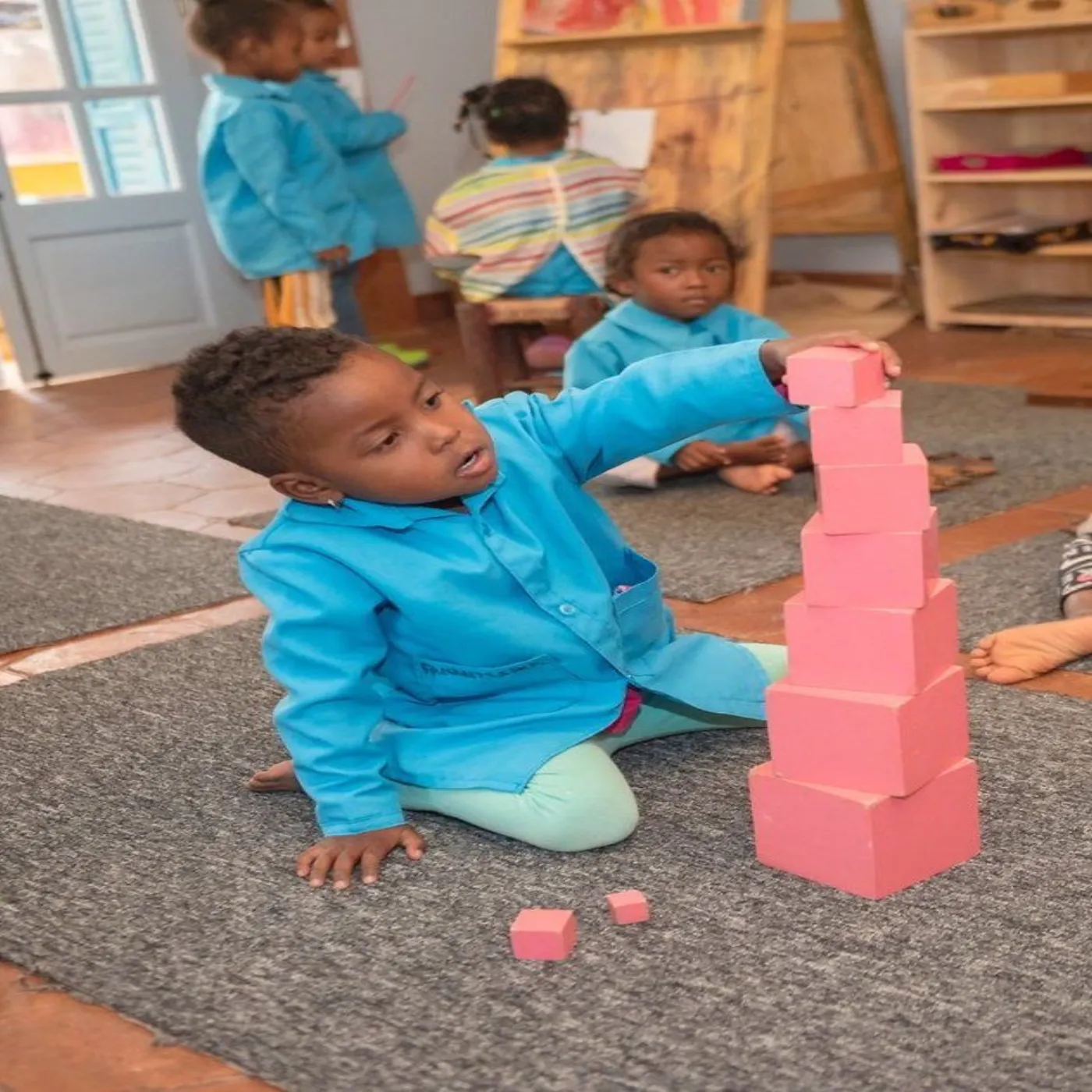
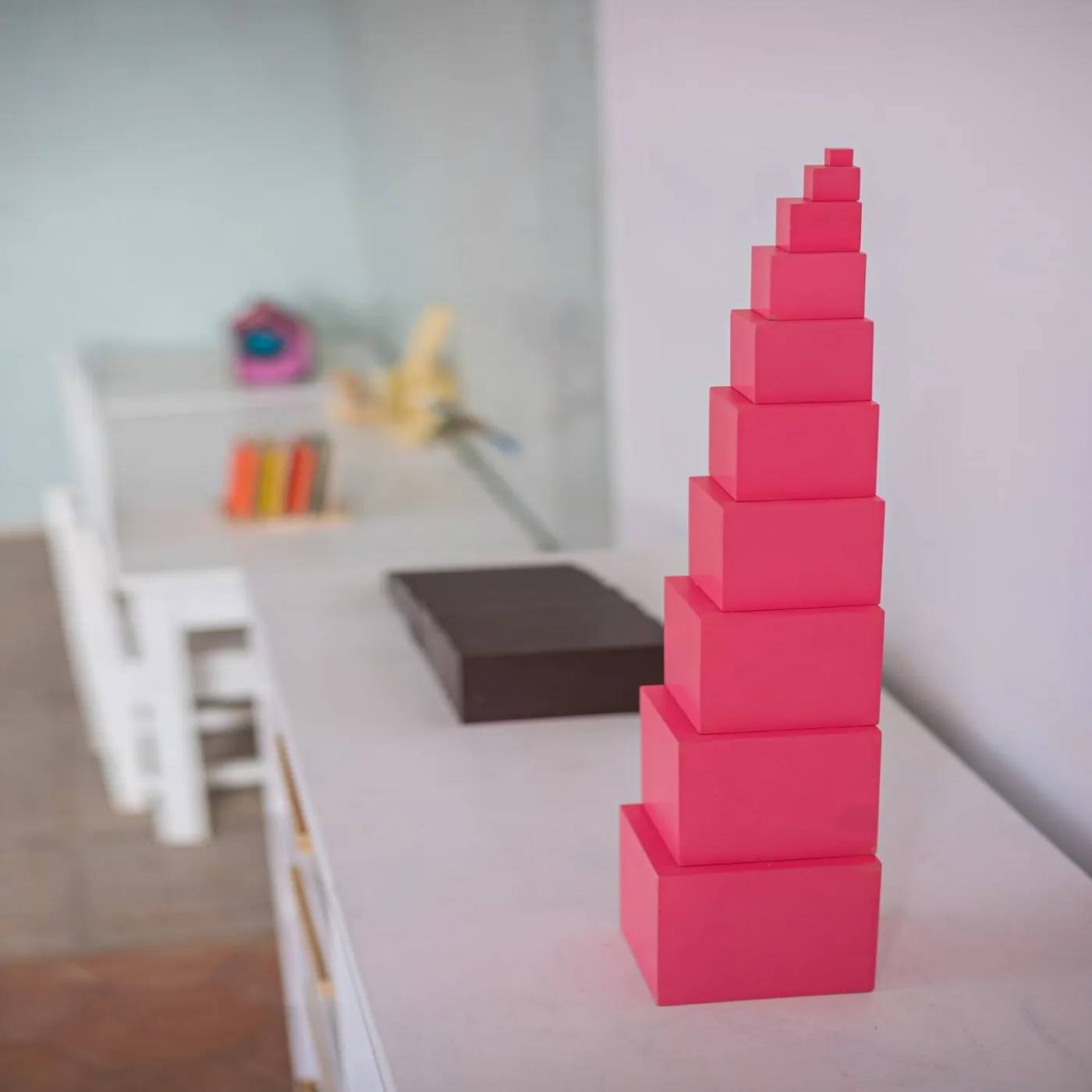
Examples include the Pink Tower, Sound Boxes, Brown Stair, Cylinder Blocks, Knobless Cylinders, Colour Tablets and Constructive Triangles.
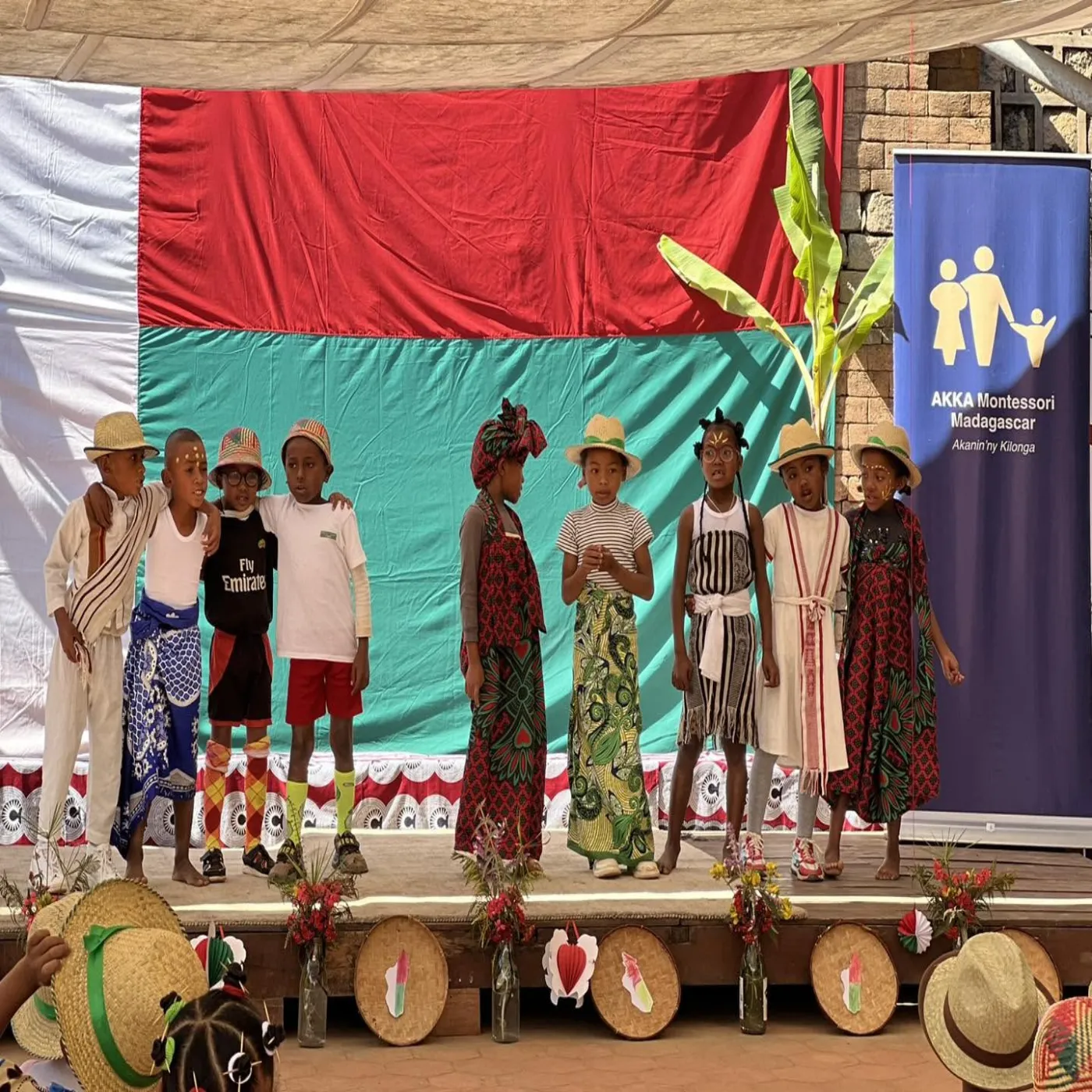
We value children’s home languages and cultural identity. The environment is bilingual in Malagasy and French; English is introduced through songs. Stays by native English-speaking educators also provide language immersion.
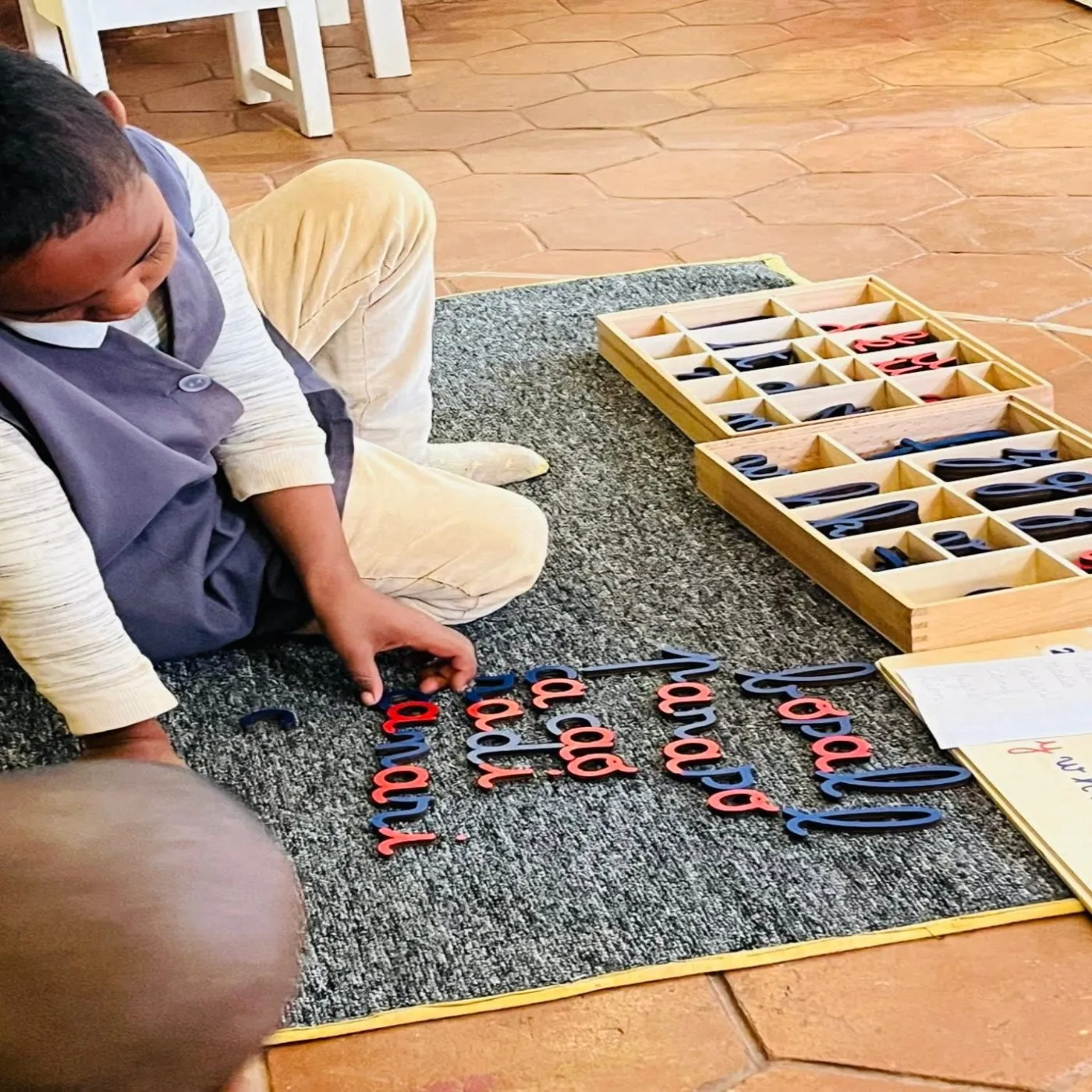
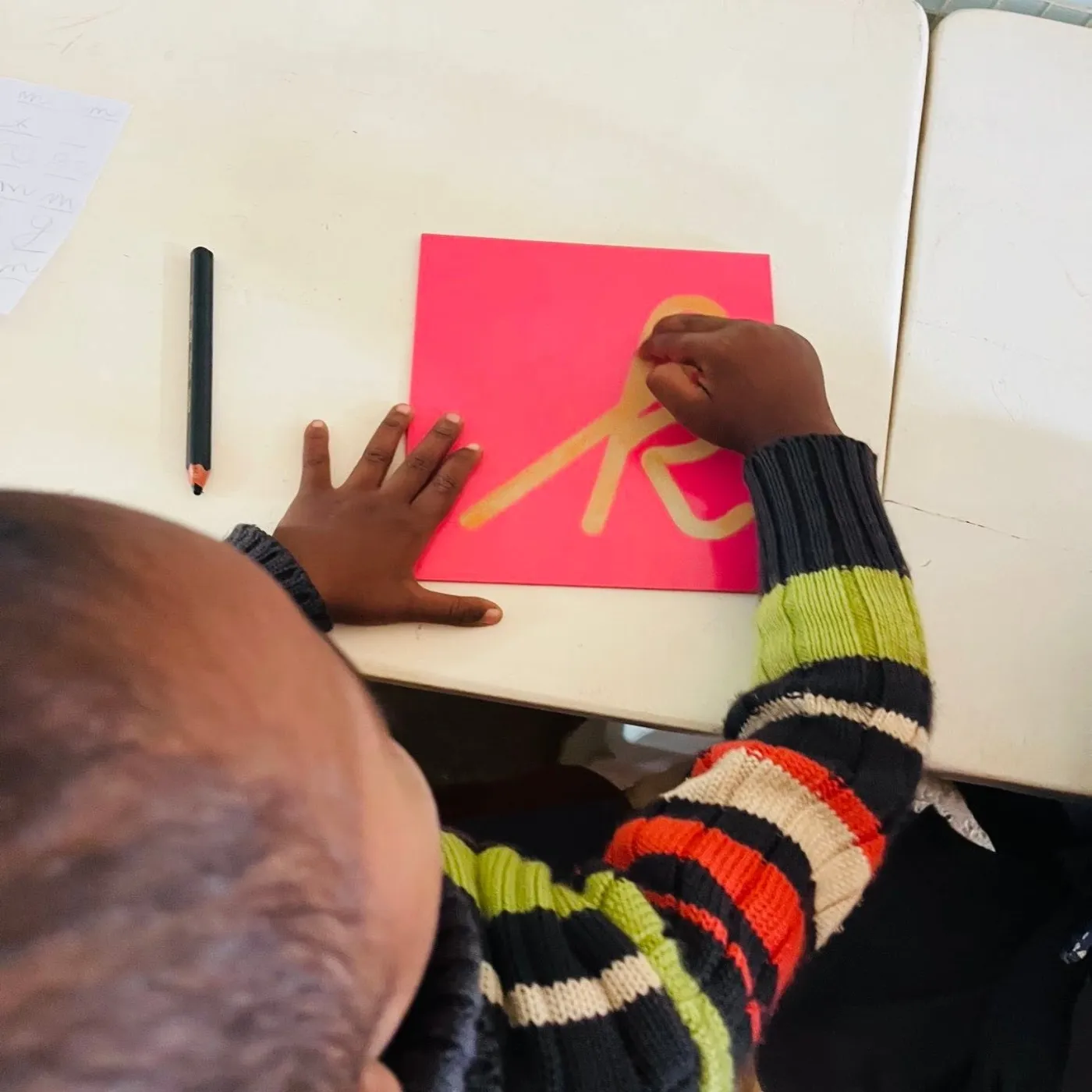
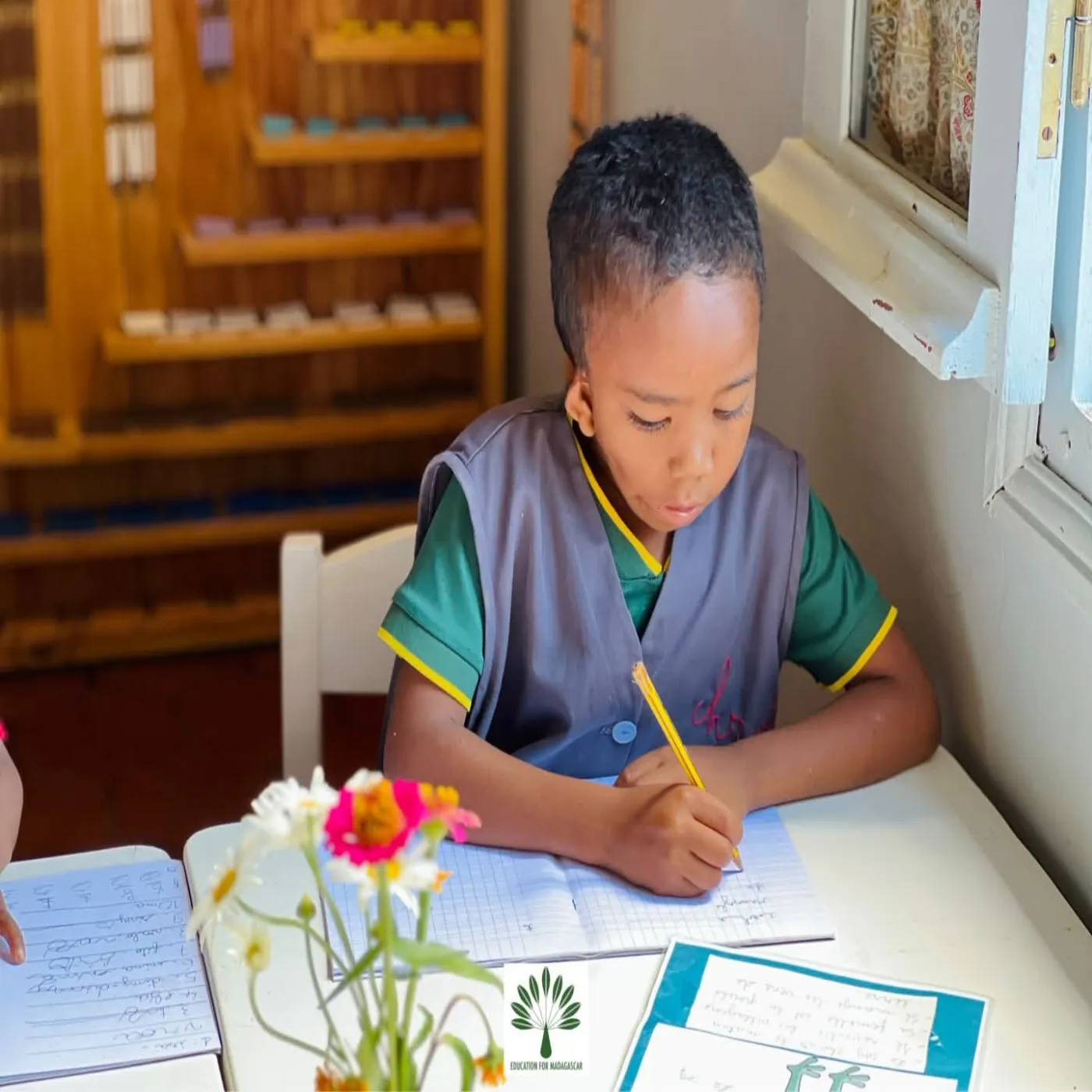
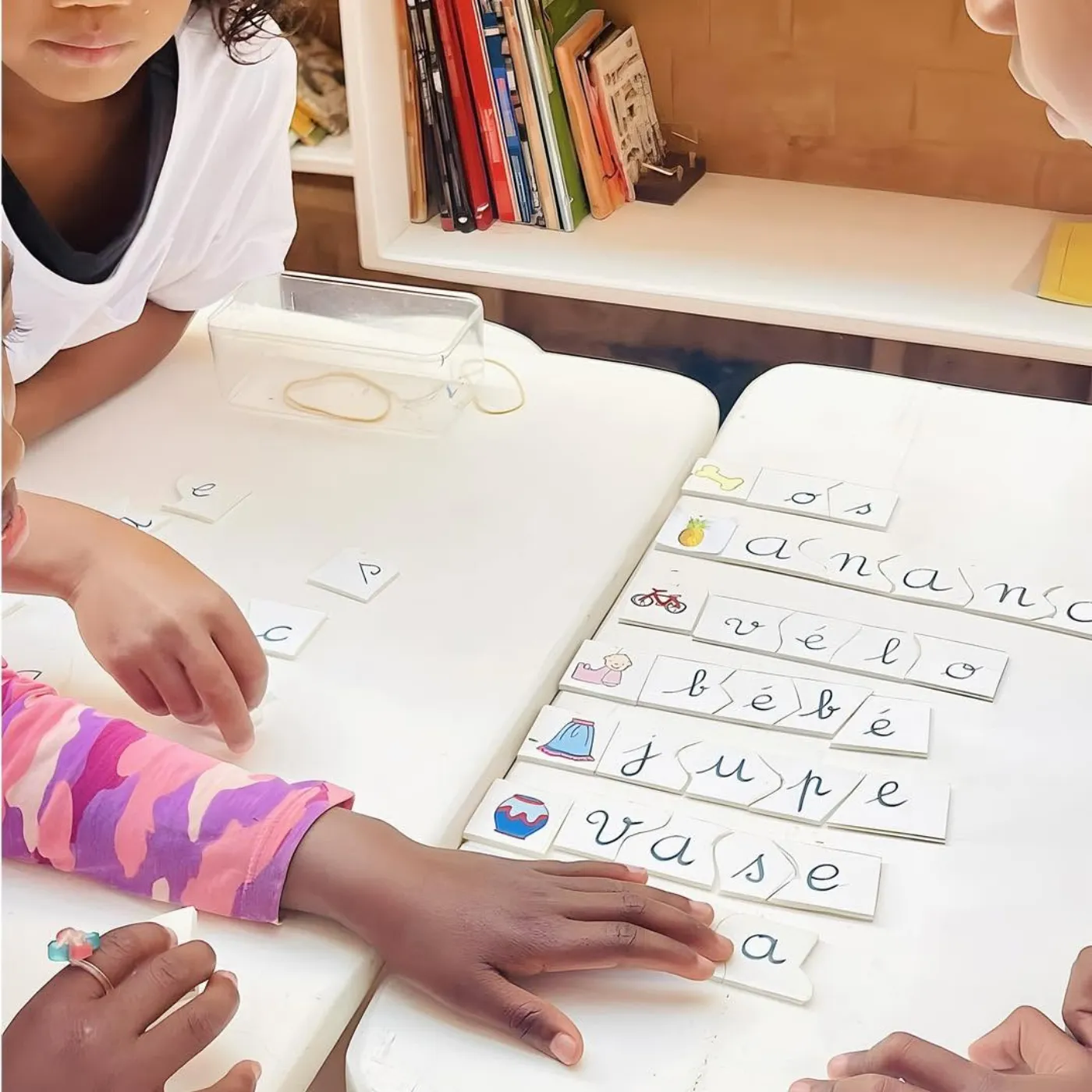
Materials support writing, reading, mathematics and other areas of knowledge through a structured progression. Children aged four to five in a Montessori classroom are generally able to read, write and do arithmetic. Activities include Metal Insets, the Movable Alphabet, Sandpaper Letters, matching objects with picture cards and word cards, and blending sounds to form words.
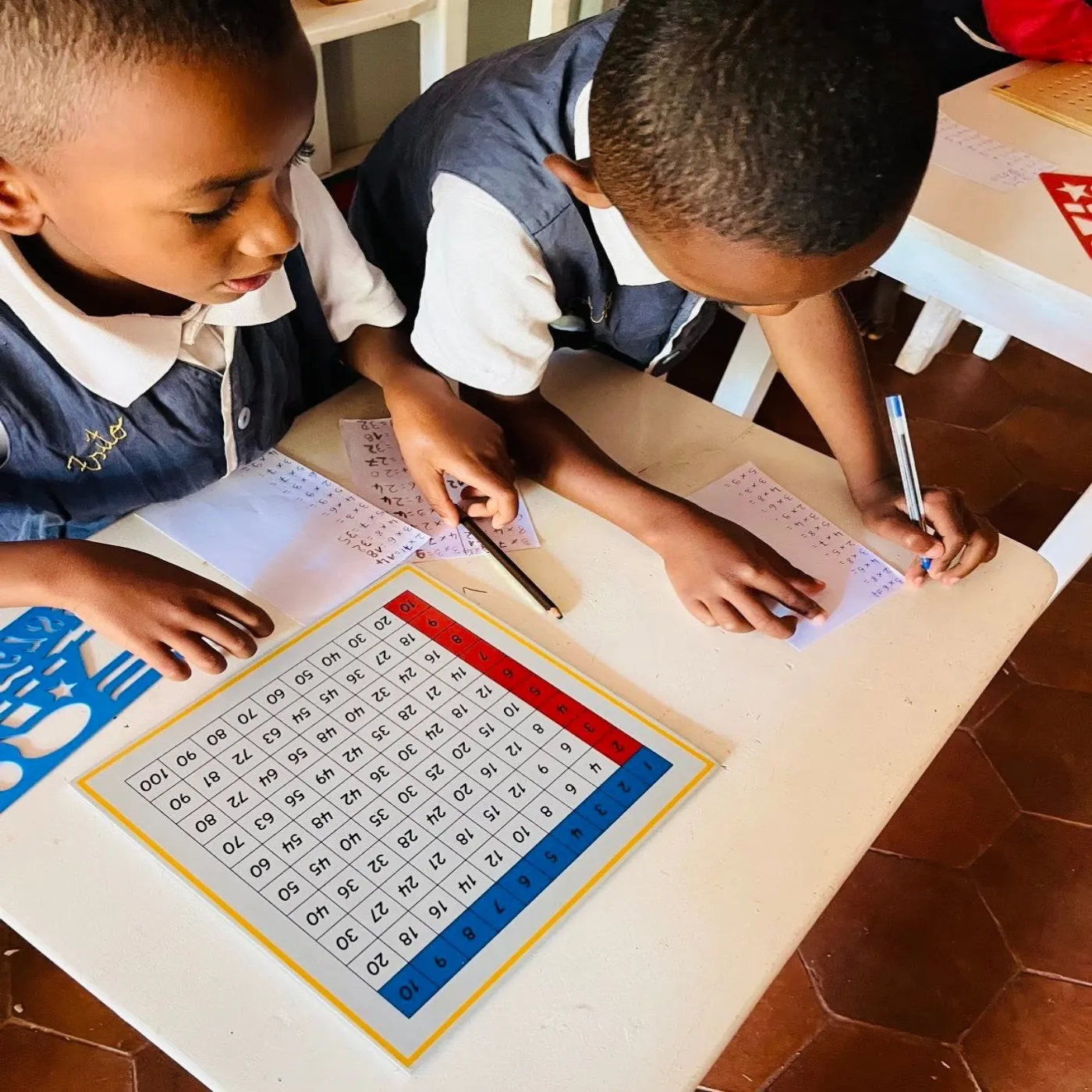
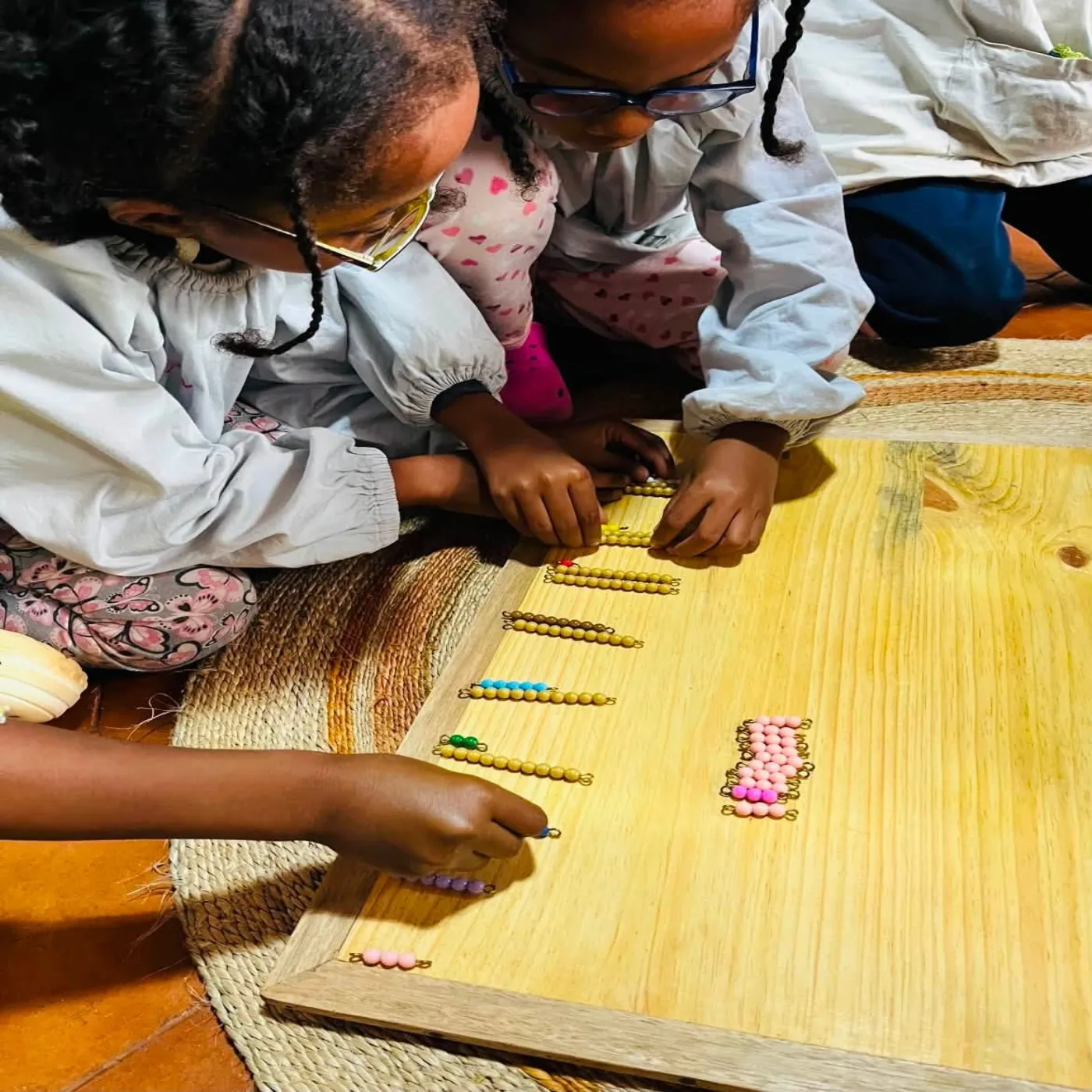
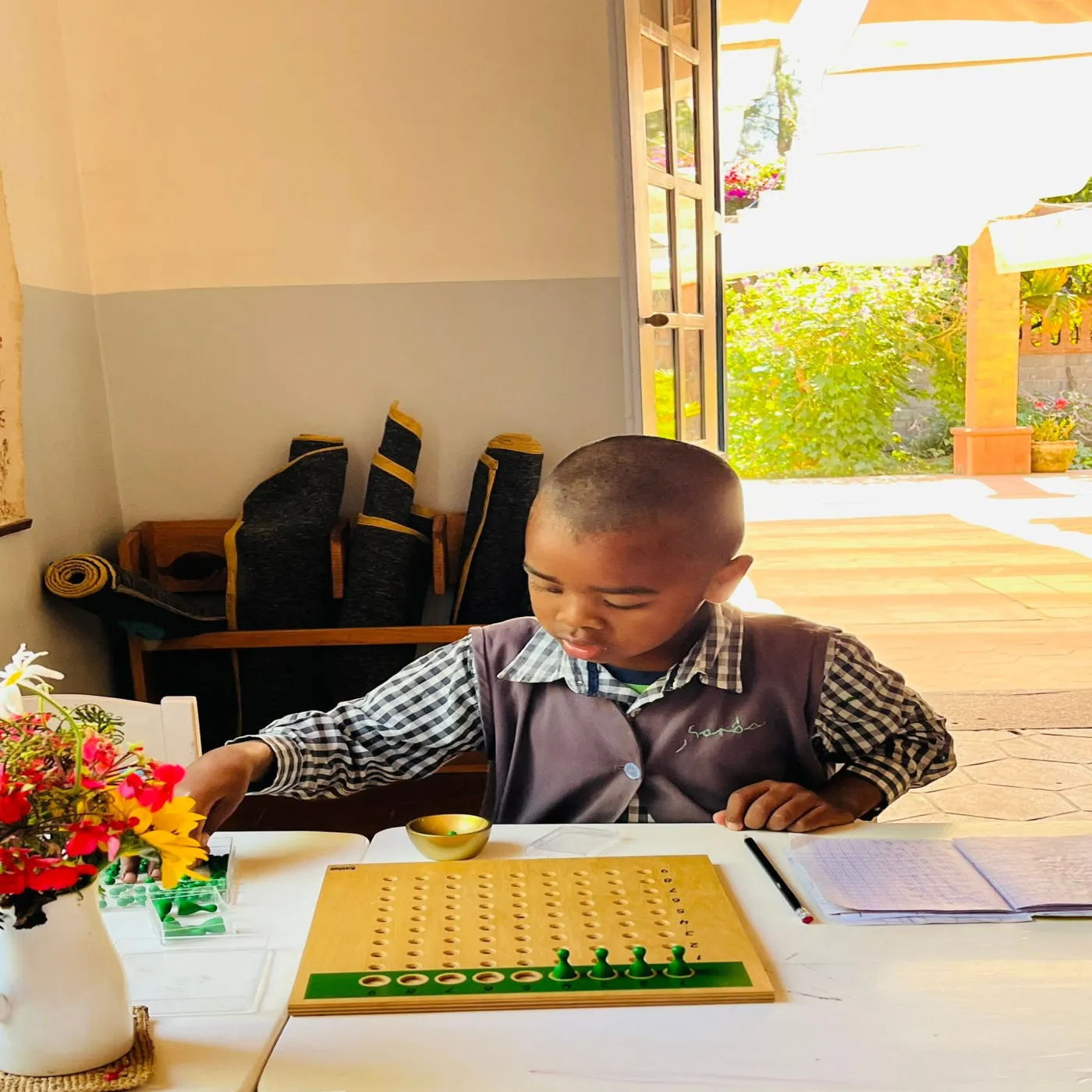
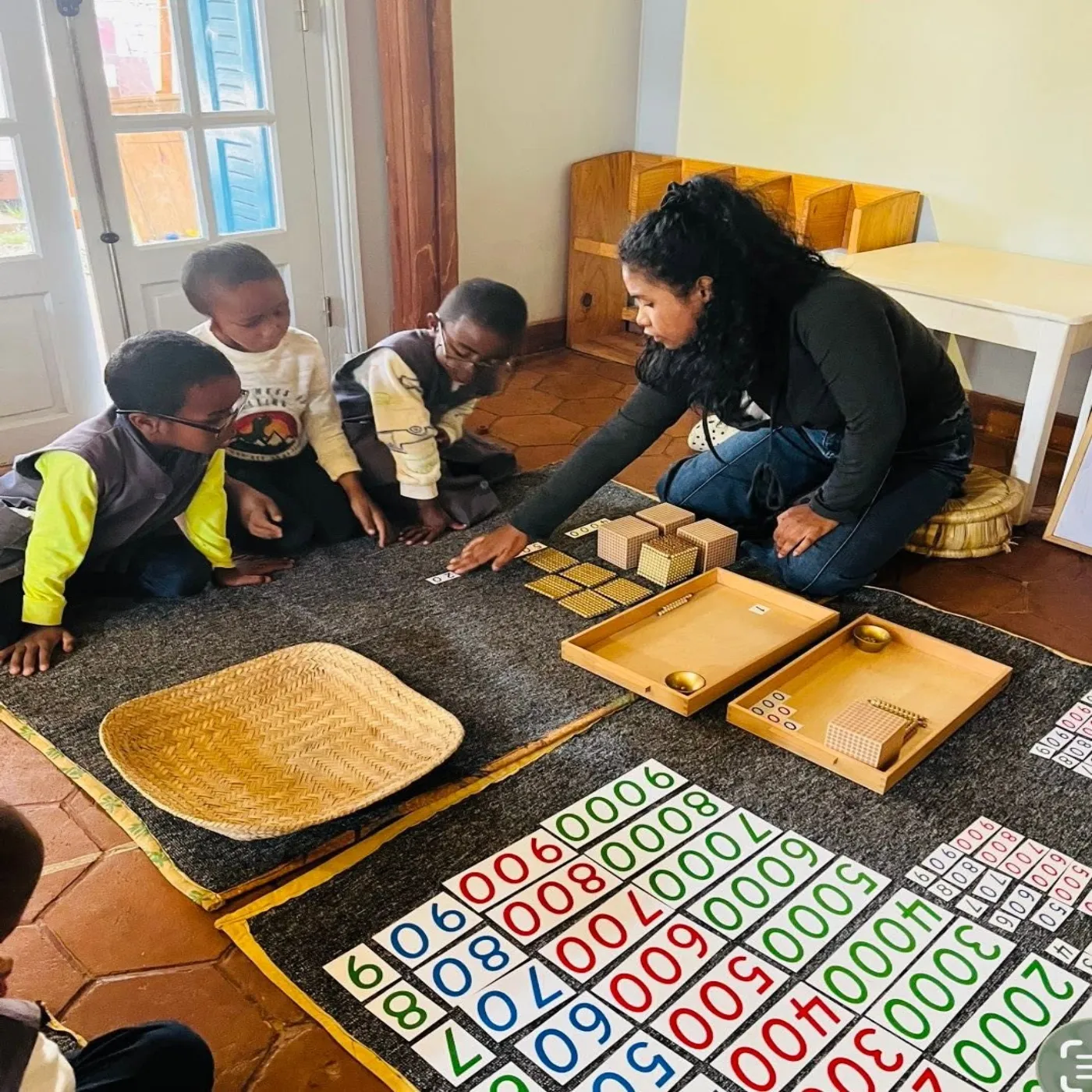
Concrete materials help children explore numbers, quantities, operations and place value: Golden Beads, Multiplication Beads, Coloured Addition Beads, Number Rods, Sandpaper Numerals, Spindles, and Cards and Counters for counting and discovering odd and even numbers.
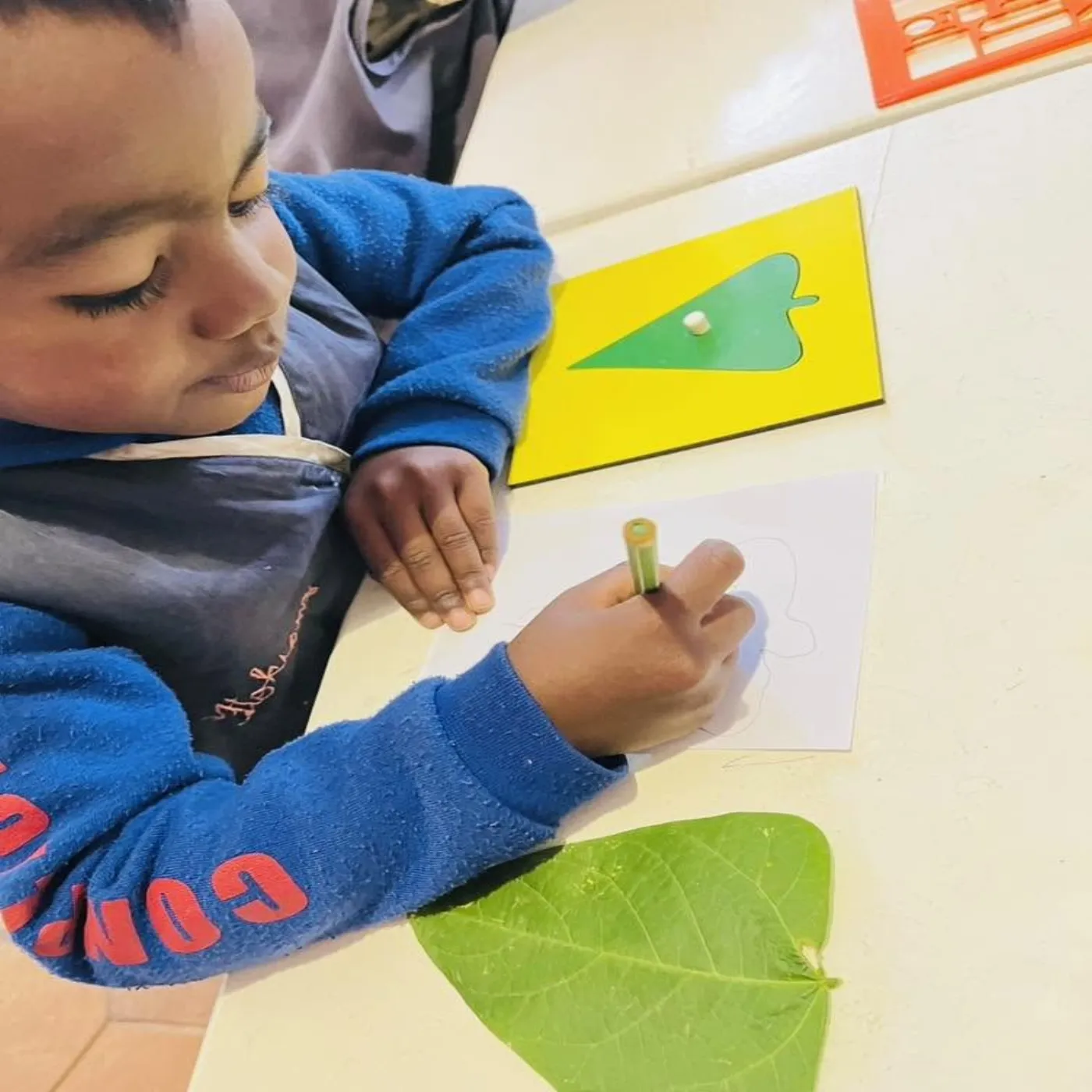
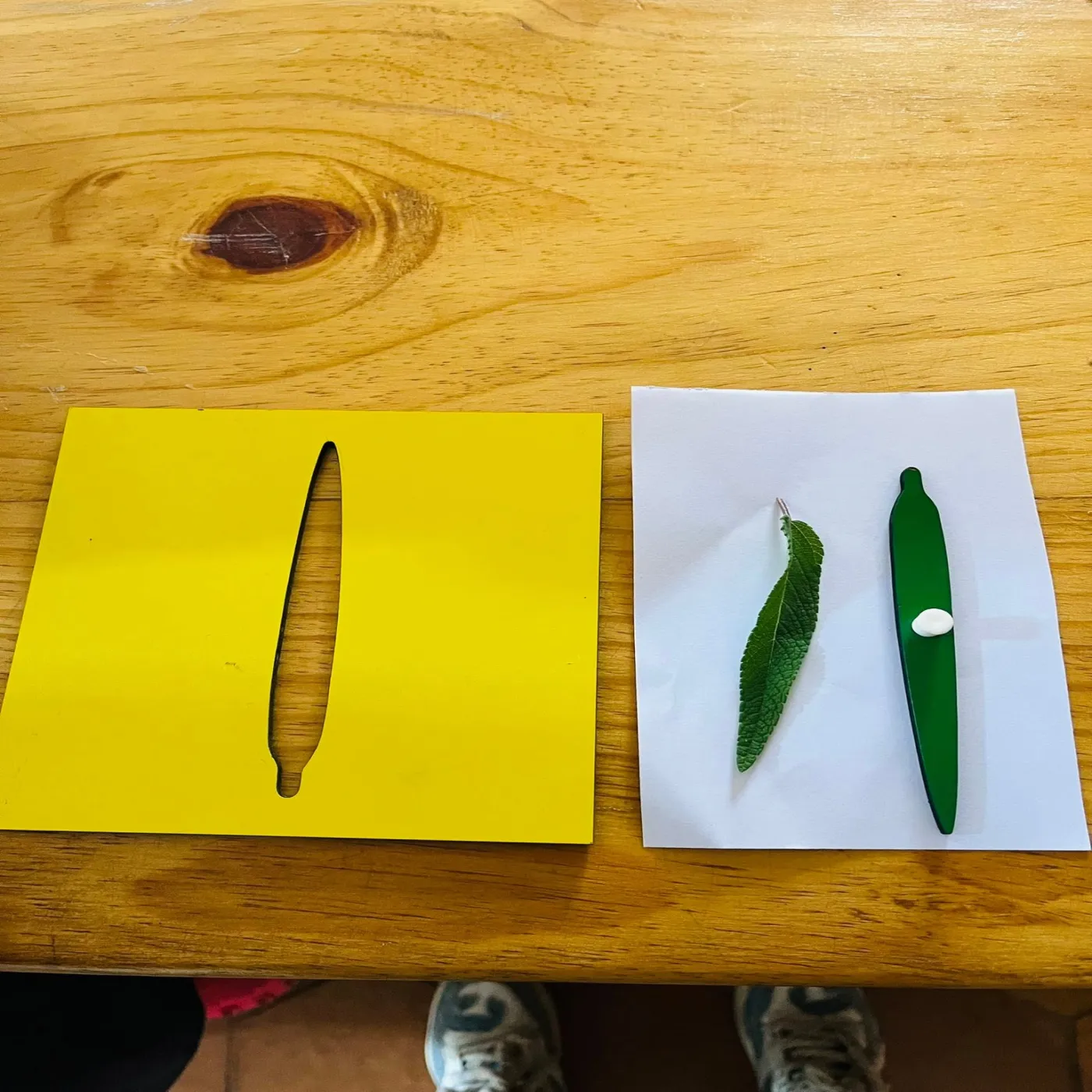
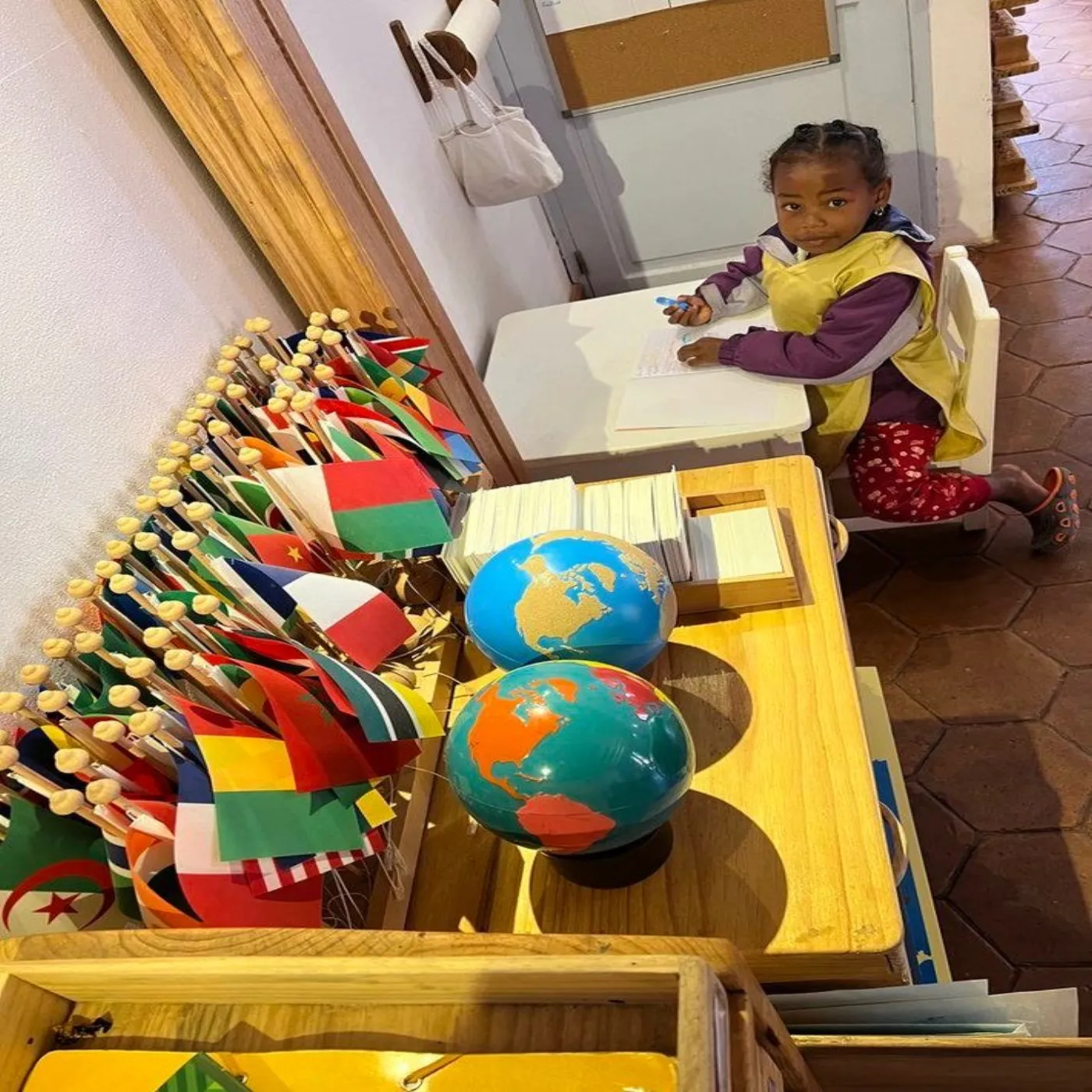
Geography, history, botany, science and astronomy open new horizons. Puzzles about the butterfly life cycle, parts of a flower, landforms and bodies of water help children discover the world around them.
A Montessori educator understands the principles of Montessori education and child development, respects individual differences and prepares a safe environment suited to children’s development. They observe children, interpret their behaviour and prepare materials and activities in response to their interests and sensitive periods. They give children opportunities to discover and learn for themselves, intervening as little as possible.
By respecting each child’s pace, this approach nurtures curiosity, concentration, self-discipline, engagement and self-control. It supports children’s development and their ability to take part in the life of their community.
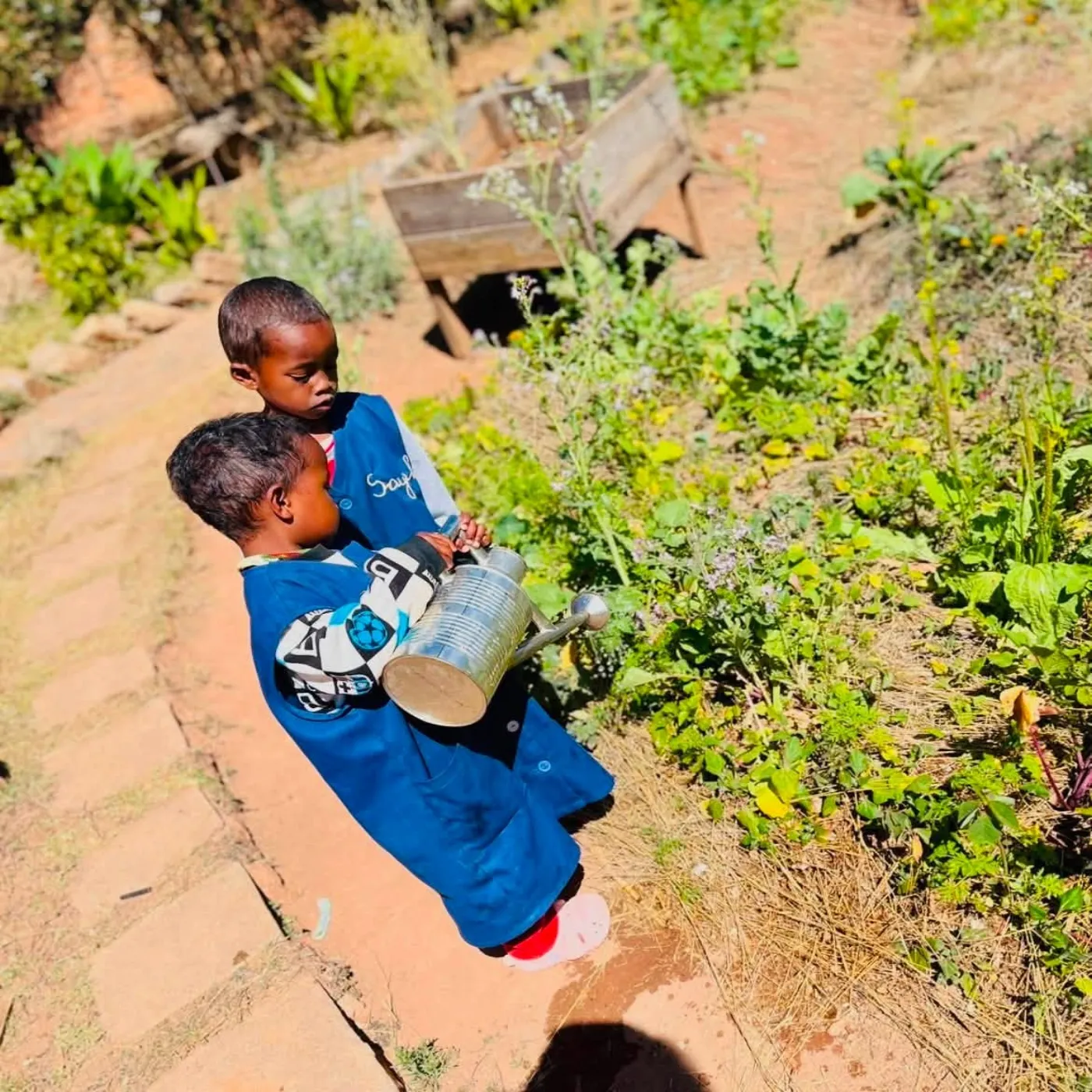
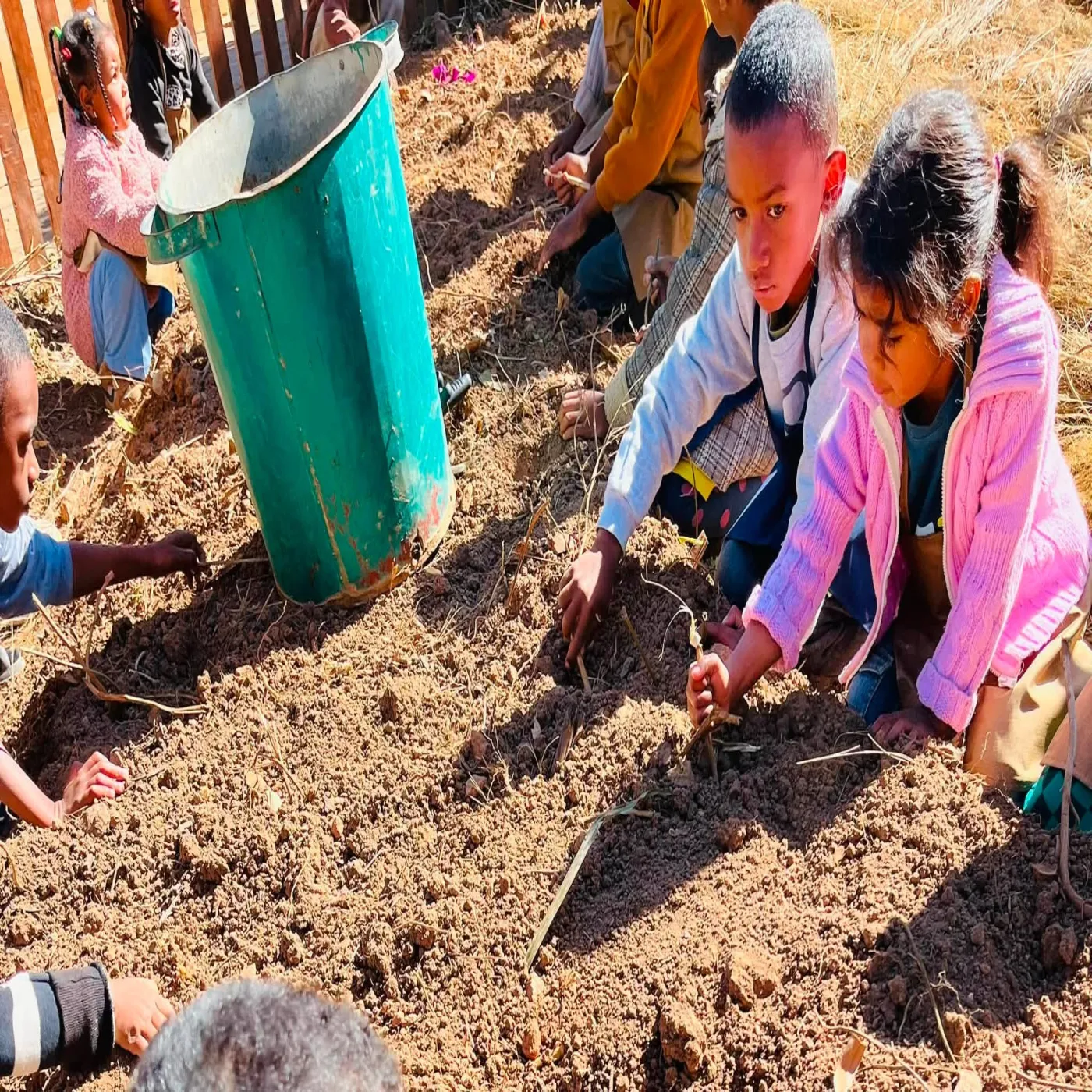
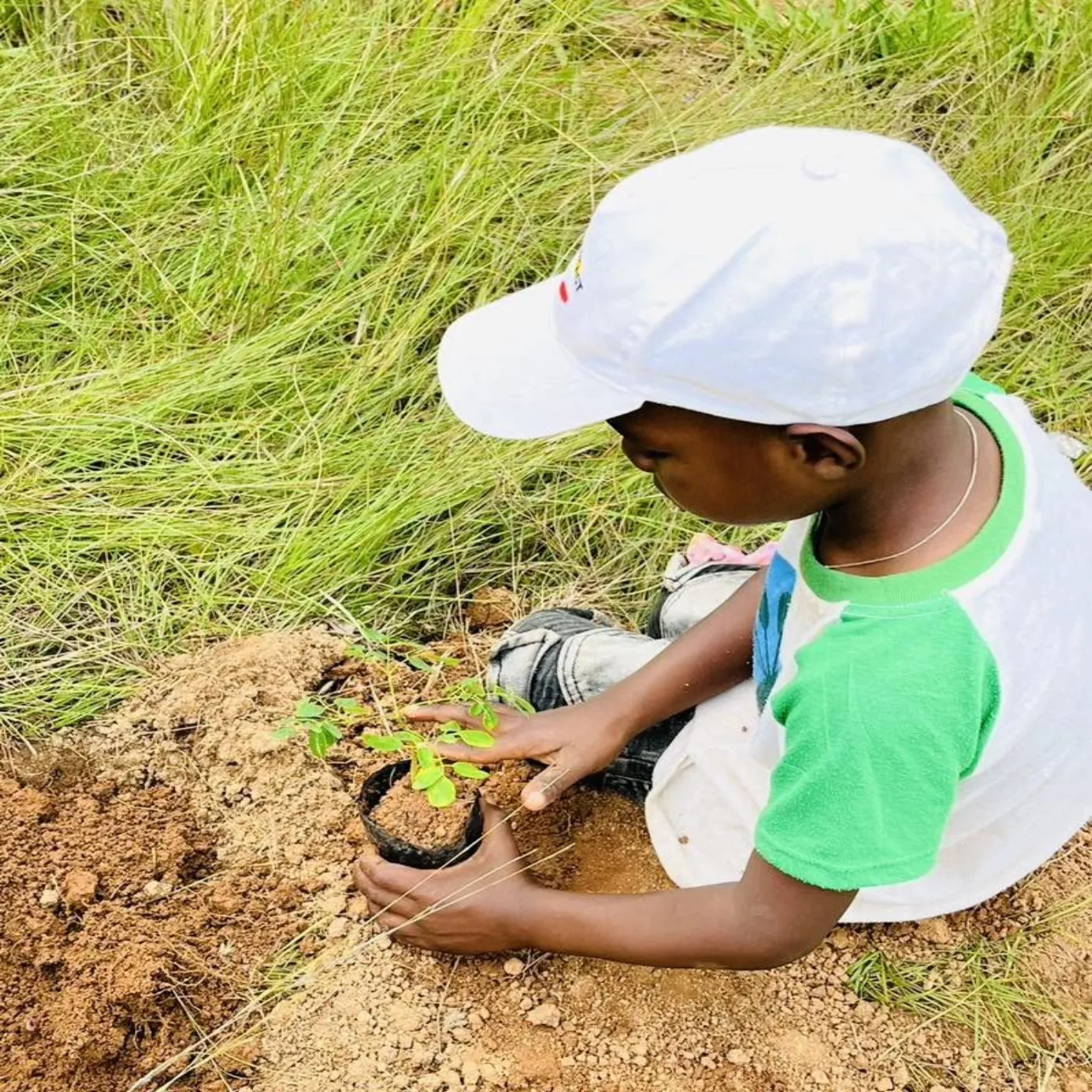
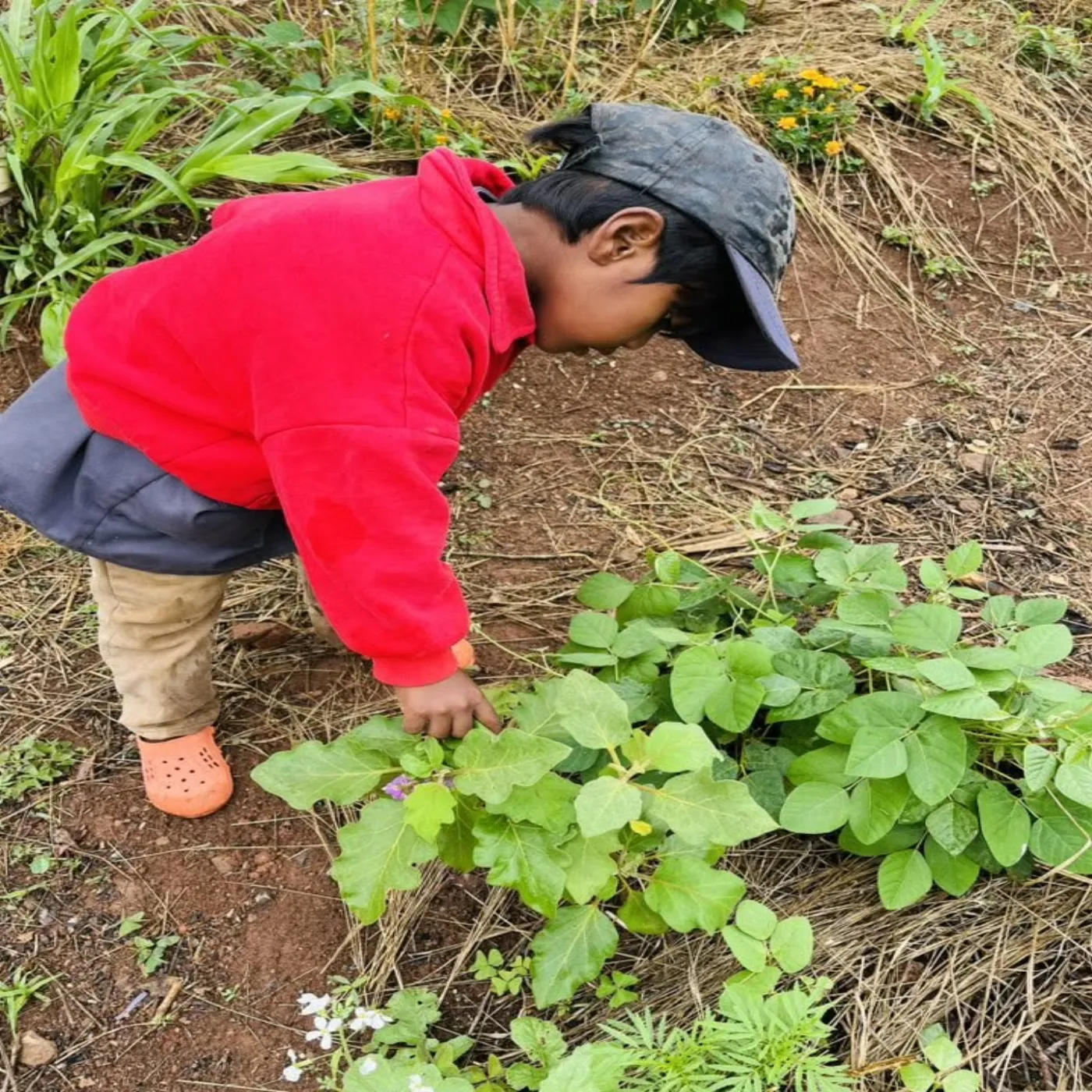
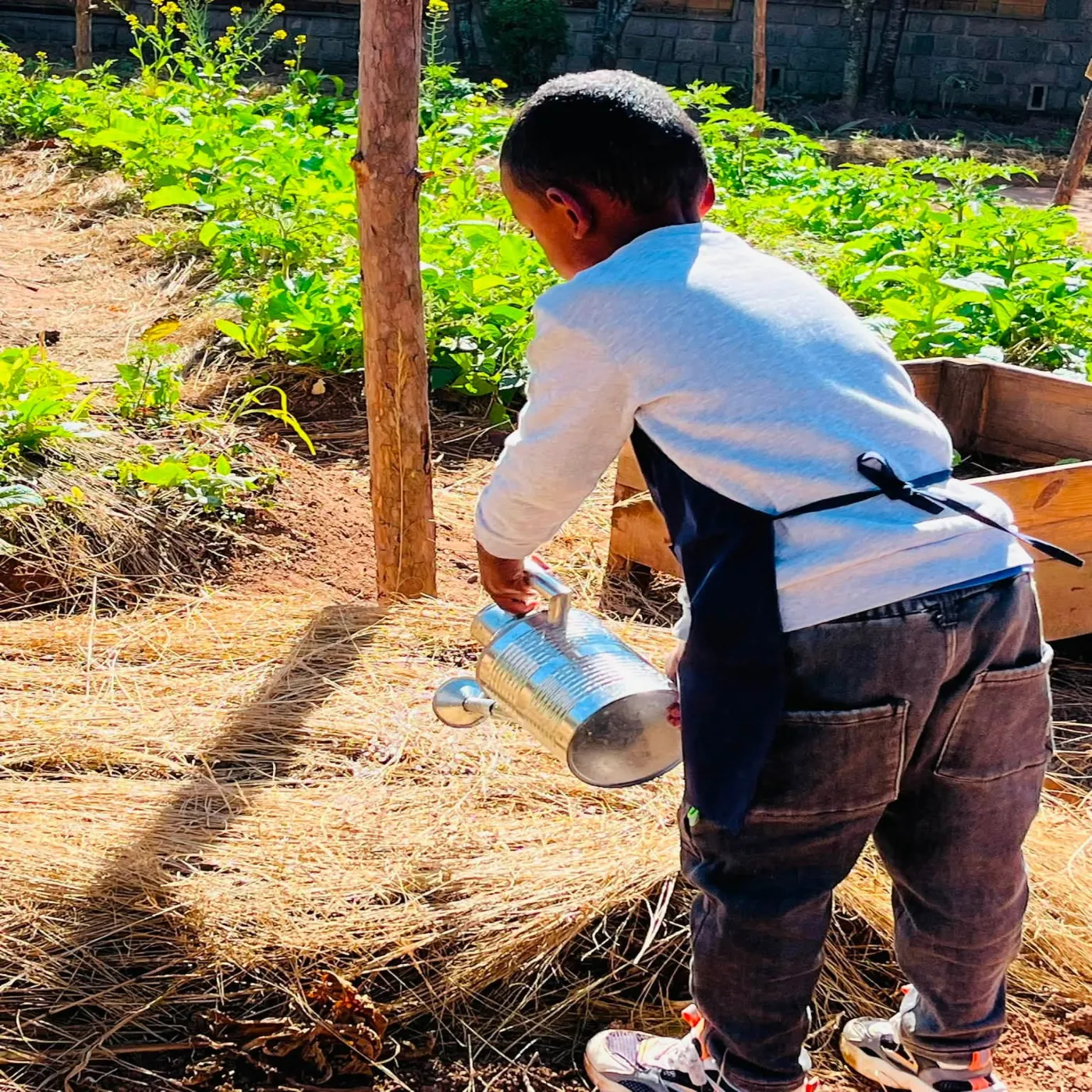
Outdoors, the garden becomes a place of learning. Children garden, care for plants and animals, and develop ecological awareness through hands-on experience. Our commitment includes rainwater collection and dry toilets, renewable energy such as solar power, sharing permaculture practices with families, and planting and monitoring trees and plants to protect biodiversity.
In a Montessori classroom, the educator observes, guides and prepares the environment. Artificial intelligence can help with some tasks and give educators more time to support each child individually.
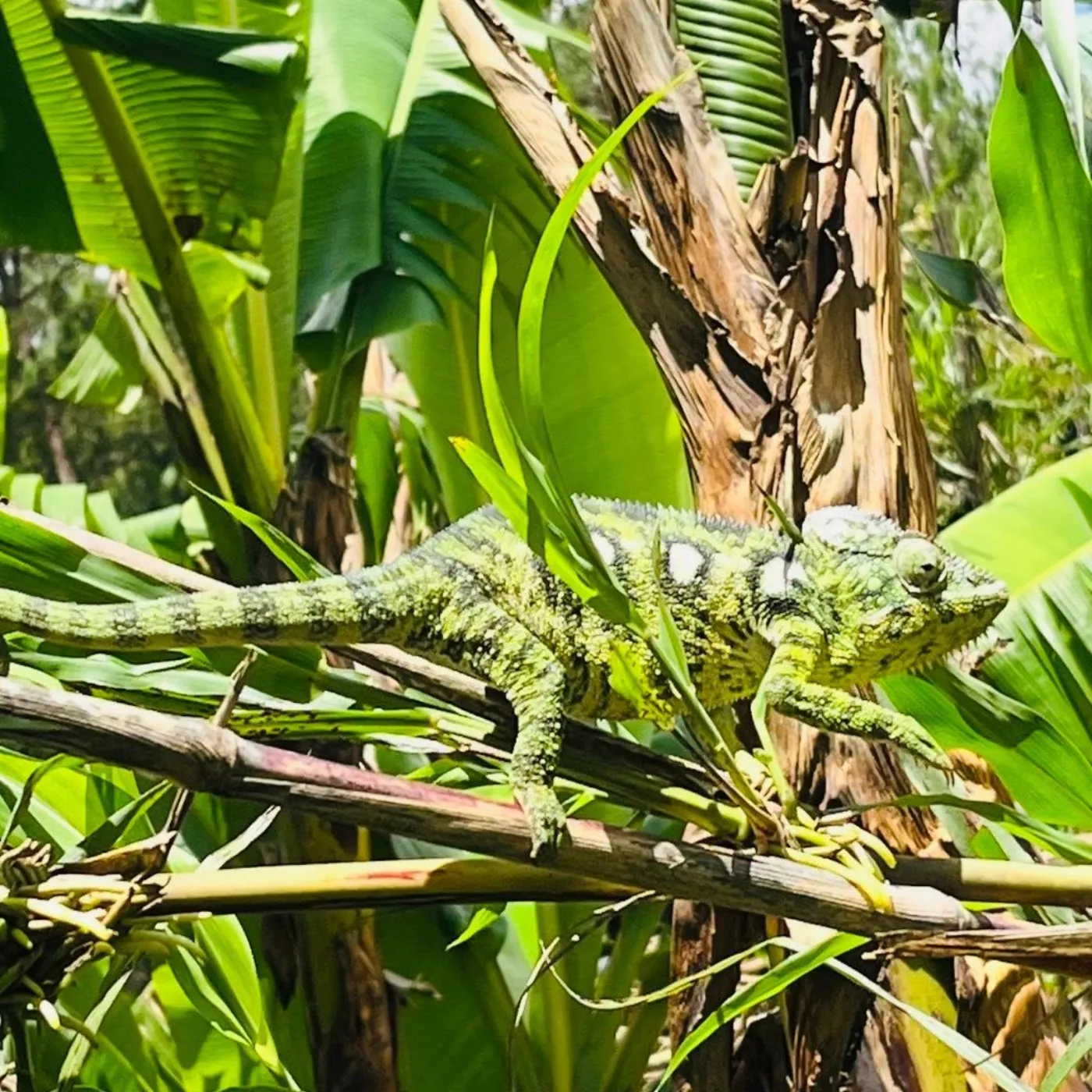
With AI, we have created illustrated cards about Madagascar’s animals and plants to teach vocabulary in Malagasy, French and English. This approach makes the materials consistent, affordable, quick to produce and free of rights restrictions.
AI helped us develop an intranet for educators and staff to manage pupil information and administrative tasks, follow each child’s progress, share clear summaries with parents and communicate the benefits of our approach. Existing tools rarely bring administrative and educational needs together in a suitable, affordable way. To protect pupils’ personal data, it is stored on our own servers.
Children remain at the heart of education. Relationships with educators, observation, handling concrete materials, movement, creativity and social interaction are essential. Children learn by acting, observing, exploring and making discoveries of their own.
Our school has chosen not to expose children to screens before the age of 9. AI therefore does not take part directly in their learning at this age; it can support the adults who guide them. This choice protects their independence, concentration, imagination, motor development, critical thinking and ability to build knowledge through real experiences.
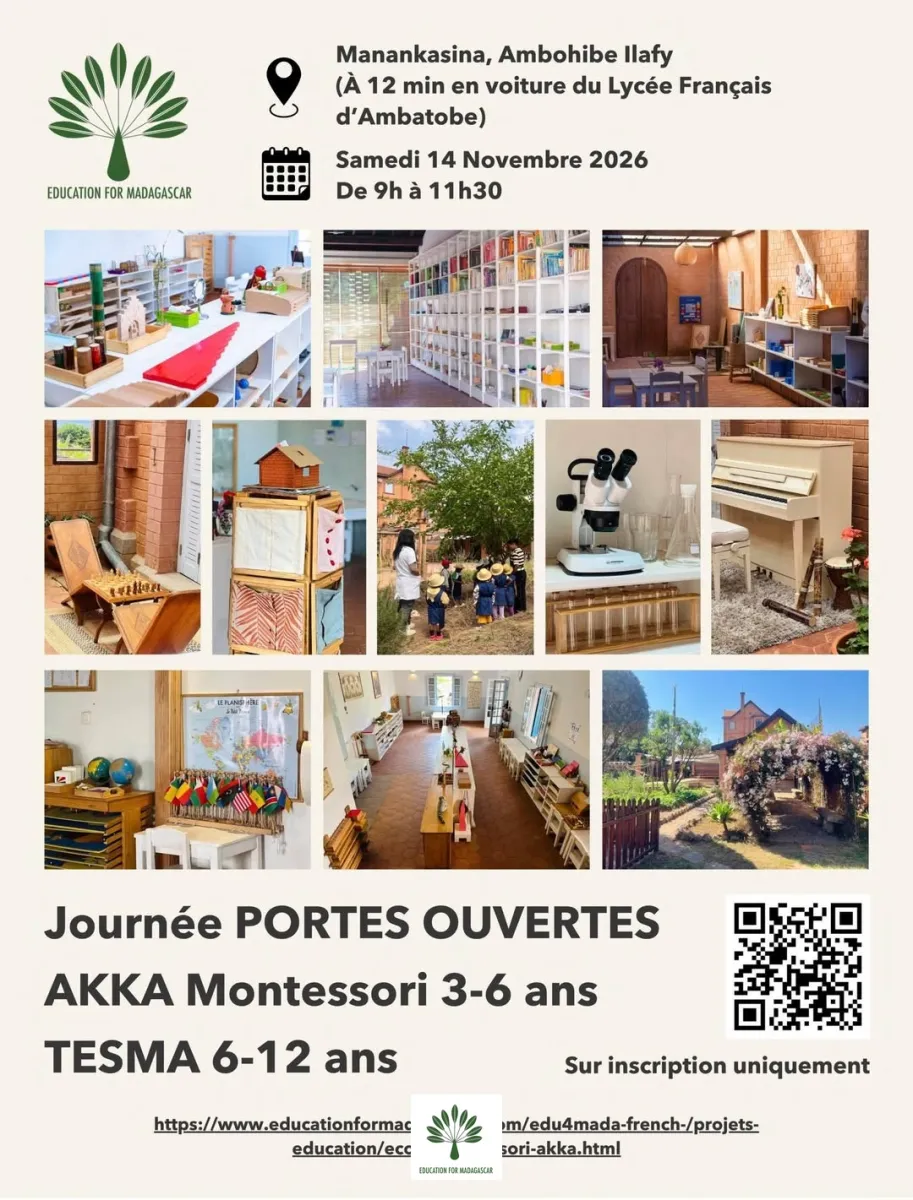
After the 3–6 cycle, TESMA welcomes children aged 6 to 12. AKKA and TESMA introduce families to their Montessori environments during open days.
Learning at AKKA
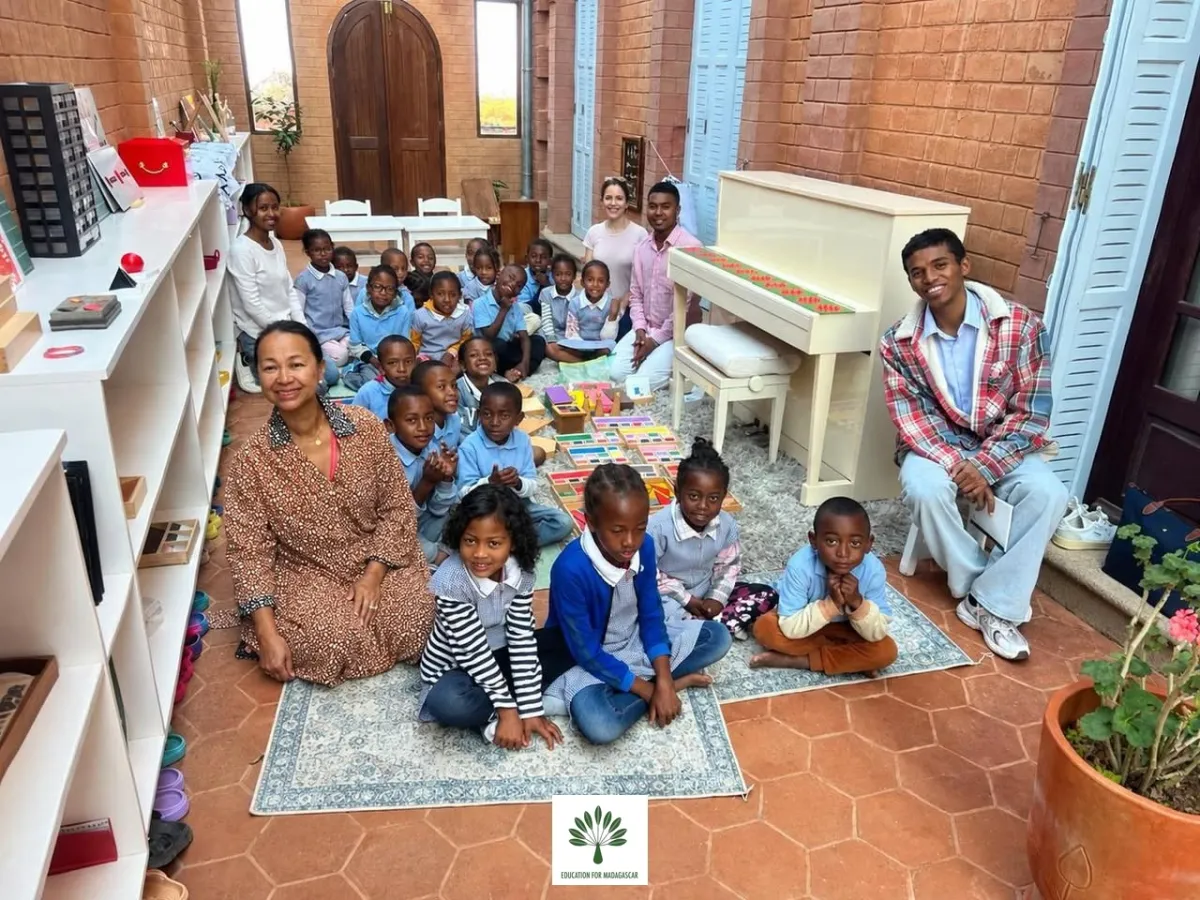
Children learn by handling materials, sharing ideas, taking part in classroom life and caring for their surroundings.
Take part
Support learning activities or contact the team to discuss a contribution suited to the project.
Project publications